How to Introduce Solid Foods Without the Stress
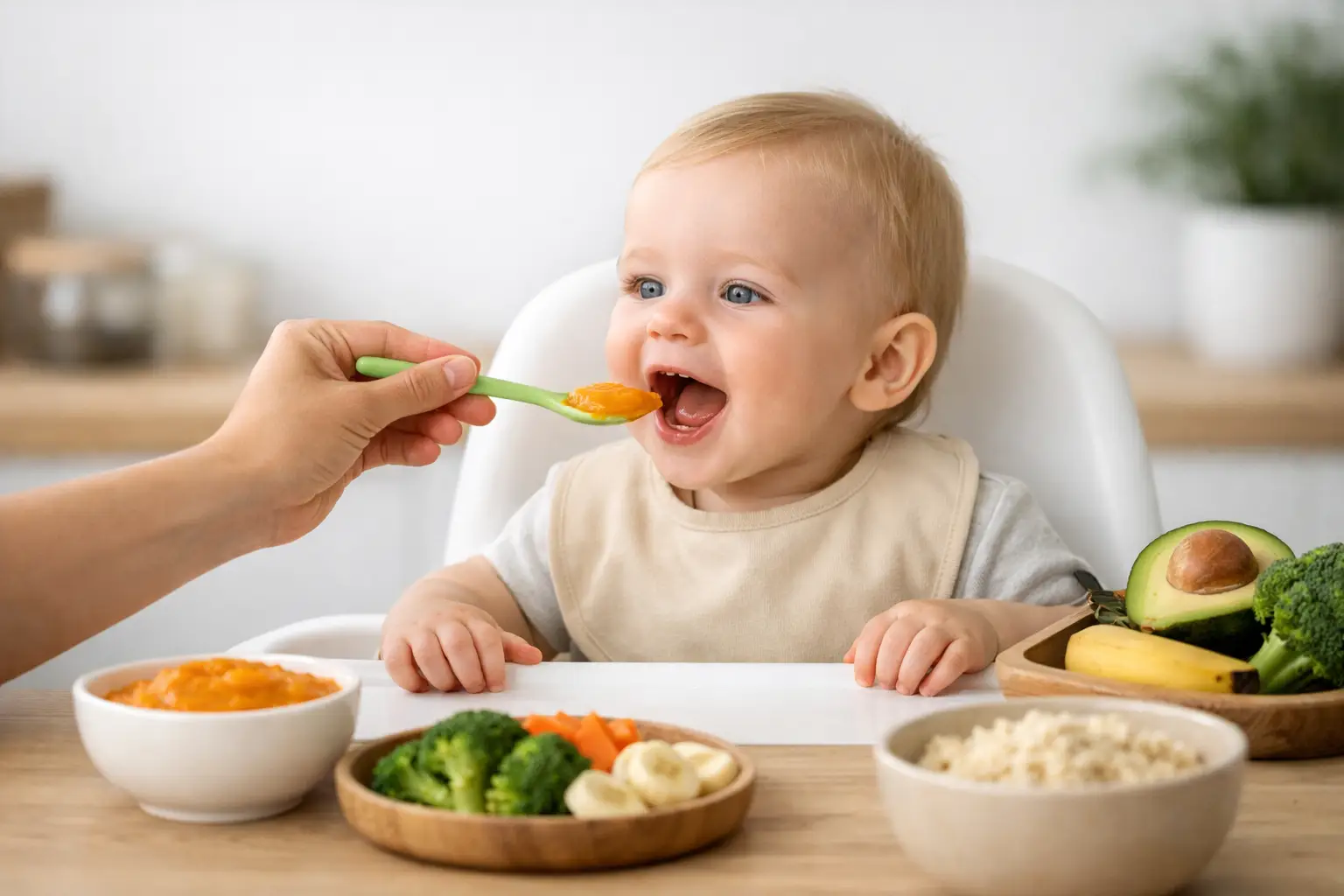
The first spoonful rarely looks like the tidy milestone parents imagine. It may end up on the bib, in your baby’s hair, and somehow under the high chair. Learning how to introduce solid foods is less about getting your baby to eat a full meal and more about giving them safe, low-pressure chances to explore new tastes and textures.
For most families, solid foods begin as practice alongside breast milk or infant formula, not as a replacement for either. A flexible plan helps you notice your baby’s cues, respond to their appetite, and make room for the inevitable mess.
When is your baby ready for solid foods?
Many babies are ready to begin around 6 months old, though readiness matters more than the calendar. Starting before about 4 months is generally not recommended, and some babies need a little more time beyond 6 months. If your baby was born prematurely or has a medical condition affecting feeding or growth, ask their pediatrician for individualized guidance.
Look for several of these signs together:
- They can sit with little support and keep their head steady.
- They show interest in food, such as watching you eat or reaching for your plate.
- They open their mouth when food approaches.
- They can move food from the front of the mouth toward the back to swallow rather than pushing it straight out with their tongue.
- They are still hungry after their usual breast milk or formula feeds.
Interest alone is not always enough. A 4-month-old may stare intensely at your dinner because babies are curious, not because their bodies are ready to manage food safely. Strong head and trunk control are especially important because they help reduce choking risk.
How to introduce solid foods: start small and stay responsive
Choose a time when your baby is awake, content, and not overly hungry. Many parents find that offering a little breast milk or formula first takes the edge off hunger, making their baby more willing to experiment. Sit your baby upright in a secure high chair with a footrest if possible. Their hips, knees, and ankles should be supported, not dangling.
Start with one small serving once a day. A teaspoon or two is plenty in the beginning. Some babies eagerly grab the spoon; others press their lips shut or make a skeptical face. Neither reaction tells you much about their future eating habits.
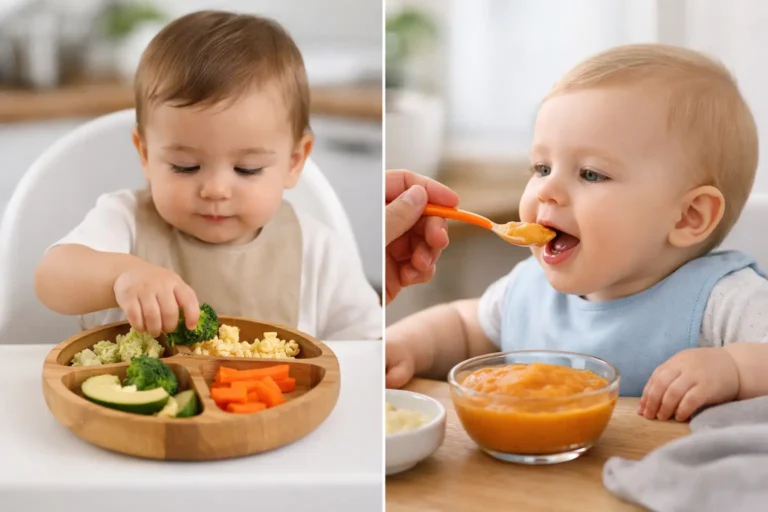
You can offer food on a preloaded spoon, let your baby bring it to their mouth, or offer appropriately prepared soft finger foods. Spoon-feeding and baby-led approaches do not have to be all-or-nothing choices. Many families use a combination based on what works for their baby and their comfort level.
Your job is to decide what foods are available and serve them safely. Your baby’s job is to decide whether and how much to eat. Avoid coaxing, distracting, or trying to sneak in “one more bite.” Responsive feeding helps children pay attention to their own hunger and fullness cues from the start.
Pick first foods with iron in mind
At about 6 months, babies need more iron from food because the iron stores they were born with begin to decrease. This is why iron-rich foods make especially useful early options. Good choices include smooth, moist preparations of meat, poultry, fish, beans, lentils, eggs, tofu, and iron-fortified infant cereal.
You do not need to begin with a single bland food or follow a rigid order. Offer a range of flavors over time, including vegetables, fruits, grains, proteins, and healthy fats. Repeated exposure is normal. A baby may turn away from broccoli or lentils several times before accepting them, and that is not a reason to stop offering them.
Texture is just as valuable as variety. Begin with smooth purées, mashed foods, and very soft pieces that squish easily between your fingers. As your baby gains skill, gradually move toward lumpier mashes, shredded foods, and soft finger foods. Waiting too long to introduce textures can make the transition harder for some babies.
Serve foods in a way that prevents choking
Gagging and choking are not the same. Gagging is a noisy, protective reflex that is common as babies learn to handle food. You may hear coughing, sputtering, or retching. Stay calm, let your baby work through it, and avoid putting your finger in their mouth, which can push food farther back.
Choking is often quiet. A baby who cannot cough, cry, or breathe needs immediate help. Every caregiver who feeds a baby should know infant CPR and choking first aid, and babies should always be within arm’s reach while eating.
Avoid common choking hazards such as whole grapes, popcorn, nuts, hard raw vegetables, chunks of meat or cheese, spoonfuls of nut butter, hard candy, and round coins of hot dog or sausage. Cut grapes, cherry tomatoes, and berries lengthwise into quarters. Spread nut butter thinly on toast or stir it into oatmeal or yogurt. Cook vegetables until very soft, and shred or finely chop meat.
Also skip honey until after your baby’s first birthday because of infant botulism risk. Avoid cow’s milk as a main drink before age 1, though small amounts used in cooking or mixed into food are generally fine. Juice is unnecessary for babies, and foods high in added sugar or sodium do not help them learn to enjoy nourishing foods.
Introduce common allergens early and carefully
Current expert-backed guidance generally supports introducing common allergenic foods in the first year once your baby is ready for solids. These foods include peanut, egg, dairy, wheat, soy, sesame, fish, shellfish, and tree nuts. Early, regular exposure may help reduce the risk of certain food allergies for some children.
Offer an allergen in a safe form and earlier in the day, when you can observe your baby. For example, mix a small amount of smooth peanut butter with water, breast milk, formula, or purée until it is thin and easy to swallow. Cook egg thoroughly and serve it mashed or in soft strips. Once a food is tolerated, include it regularly rather than offering it only once.
Talk with your pediatrician before introducing peanut or other allergens if your baby has severe eczema, an existing food allergy, or had a reaction to another food. These babies may need a more specific plan.
Watch for hives, swelling of the lips or face, repeated vomiting, coughing, wheezing, or trouble breathing after a new food. Trouble breathing, facial swelling, or signs of severe illness require emergency care. For milder symptoms, stop serving the food and contact your child’s health care provider promptly for advice.
Build a routine without making meals a battle
At first, one brief food experience a day is enough. As your baby becomes more interested and eats more, work toward two and then three meals, while breast milk or formula remains their primary nutrition through the first year. Water can be offered in small sips from an open cup or straw cup with meals once solids begin.
Keep meals short and relaxed. Ten minutes may be plenty for a new eater. A baby who turns away, closes their mouth, throws food repeatedly, or becomes fussy may be telling you they are done. End the meal without pressure and try again later.
Mess is part of the learning process, not evidence that the meal failed. Touching, smearing, dropping, and examining food teach babies about temperature, texture, and cause and effect. A washable mat under the high chair and a realistic expectation of cleanup can make this stage feel far more manageable.
If your baby is barely eating after a few weeks, consistently coughs or chokes during meals, seems uncomfortable swallowing, has poor weight gain, or strongly refuses all textures, bring it up with their pediatrician. Feeding challenges are common, and early support can make a meaningful difference.
Your baby does not need a perfect first menu or a parent who gets every bite right. They need calm repetition, safe options, and the freedom to learn at their own pace. The goal is not a clean plate. It is a child who gradually feels comfortable, capable, and curious at the table.