Potty Training Reward Chart Example That Works
Some toddlers light up at the idea of earning a sticker. Others could not care less unless there is a gummy bear involved. That is why finding the right potty training reward chart example matters more than downloading the cutest printable. A chart can be a helpful tool, but only if it matches your child’s age, temperament, and stage of potty learning.
Parents often hope a reward chart will make potty training click overnight. Sometimes it helps quickly. Sometimes it adds pressure or loses its appeal after two days. The goal is not to create a perfect system. It is to make the process more predictable, motivating, and low-stress for your child.
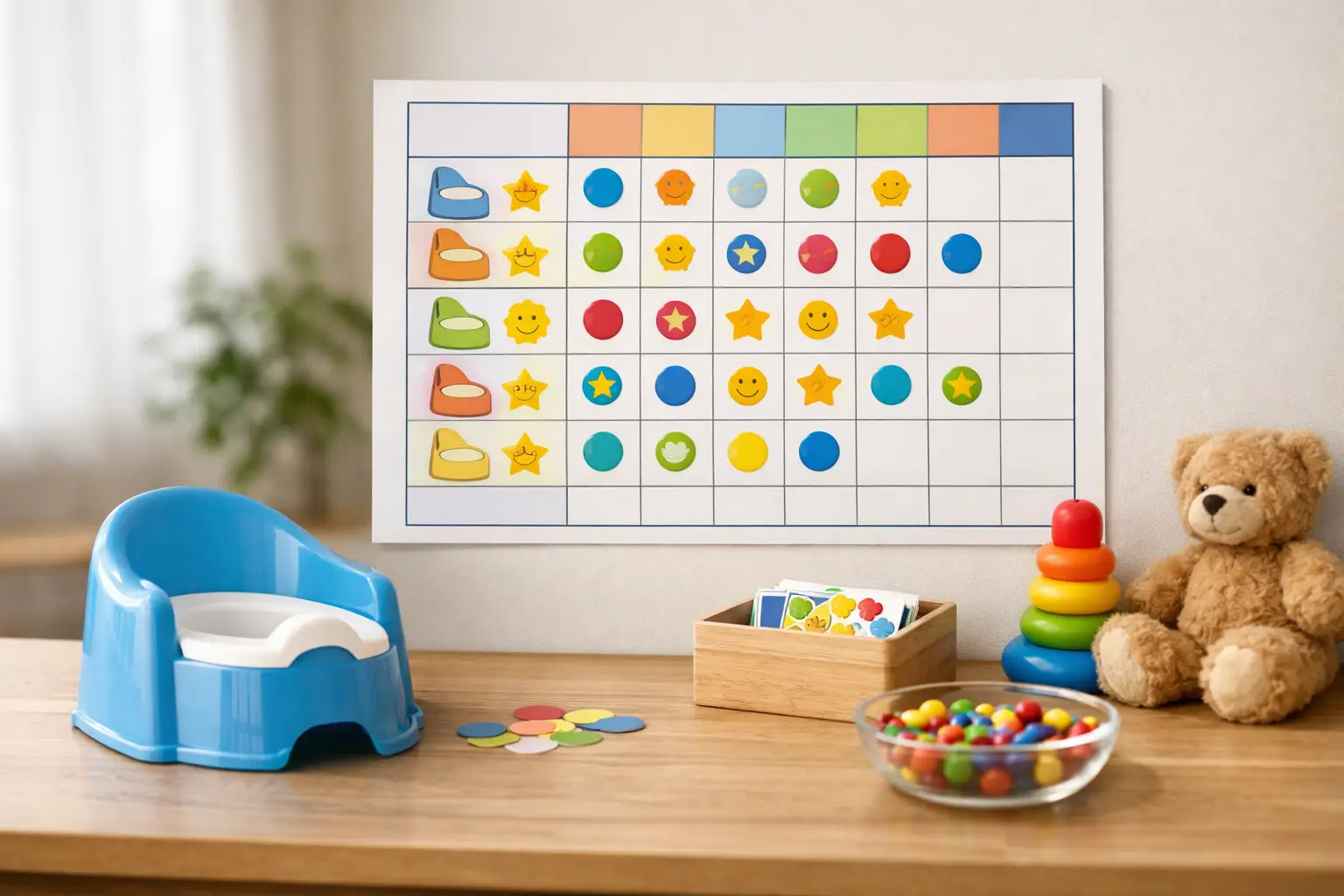
A simple potty training reward chart example
A good potty training reward chart example keeps the target behavior clear. For most toddlers, that means rewarding one small step at a time instead of expecting everything at once.
Here is a simple progression many families use:
| Potty step | Reward | | — | — | | Sits on potty when asked | 1 sticker | | Tries to pee or poop | 1 sticker | | Pees in potty | 2 stickers | | Poops in potty | 3 stickers | | Stays dry for a set block of time | 1 sticker | | Fills one full row | Small prize or special activity |
This kind of chart works because it recognizes effort, not just perfect success. For a child who is nervous about the toilet, earning a sticker for simply sitting down can be the difference between resistance and cooperation.
If your toddler is already comfortable sitting on the potty, you may want to simplify it further. In that case, only reward peeing and pooping in the potty so the chart stays focused on the next developmental step.
How to make a reward chart your child will actually respond to
The best chart is usually very basic. Use your child’s name, a clear grid, and a visual they can understand at a glance. Ten boxes is often enough. Twenty can feel too far away for a 2- or 3-year-old.
Choose rewards your child genuinely cares about. Stickers are useful because they provide instant feedback, but the sticker itself may not be motivating enough. Many parents pair stickers with a bigger reward after a certain number are earned, such as choosing the bedtime story, getting extra playground time, or picking a small treat.
Try to keep the rewards modest. If every successful potty trip earns a large toy, the system can become hard to sustain and harder to phase out. Small, immediate reinforcement tends to work better than oversized prizes.
What to put on the chart
What goes on the chart depends on where your child is struggling. If accidents happen because they refuse to sit on the potty, reward sitting. If they sit willingly but do not tell you when they need to go, reward communication. If bowel movements are the main issue, you may need a separate goal for poop.
A few common chart goals include sitting on the potty before bath, telling a parent they need to go, peeing in the potty, pooping in the potty, washing hands afterward, and staying dry during a specific routine like the morning.
It helps to avoid putting too many goals on one chart. Toddlers do better when they know exactly what earns the sticker.
When a potty training reward chart helps most
Reward charts tend to work best for toddlers who like routines, visuals, and clear cause-and-effect. They can also help children who are interested in being independent but need a little extra push to stay engaged.
They may be especially useful when your child is almost ready but not fully motivated, when they are proud of collecting and counting things, or when potty training has turned into a power struggle and you need a more positive structure.
That said, a chart is not always the answer. If your child is clearly not physically or emotionally ready, no amount of stickers will create readiness. If they are deeply anxious about the toilet, rewards alone may not address the fear. In those cases, it is often better to slow down, reduce pressure, and work on comfort first.
Common mistakes that make reward charts backfire
The biggest mistake is moving too fast. A parent may offer a sticker only for full potty success when the child is still scared to sit down. That makes the chart feel impossible instead of encouraging.
Another common issue is inconsistency. If one accident leads to frustration and the next success earns a sticker, the emotional tone starts to matter more than the chart itself. Toddlers respond best when the system feels steady.
Some families also run into trouble by overpraising every moment. Encouragement helps, but too much intensity can make some children feel watched or pressured. A calm, cheerful response usually works better than turning every potty trip into a performance.
Finally, avoid punishment tied to the chart. Taking stickers away for accidents often increases shame and anxiety, which can slow progress. The chart should track success, not mistakes.
A realistic daily routine using a potty training reward chart example
Many parents need more than the chart itself. They need to know how it fits into a real day with snacks, errands, and toddler moods.
Start by choosing predictable potty times, such as after waking up, before leaving the house, before nap, after meals, and before bed. Each time your child completes the charted behavior, let them place the sticker on the chart right away. Immediate reinforcement matters more than perfect record-keeping.
Use simple language. Say, “You sat on the potty. You earned a sticker,” or “You peed in the potty. Let’s put two stickers on your chart.” Keeping your words direct helps your child connect the action and reward.
If your child has an accident, keep the response neutral. Clean up, remind them what the potty is for, and move on. The chart should not disappear because of a hard moment. The next opportunity is what matters.
How long should you use it?
Most reward charts work best as a short-term support, not a forever system. Some toddlers only need one or two weeks before the routine sticks. Others need longer, especially for poop training or staying dry outside the house.
Once your child is consistently successful, start spacing out rewards. You might move from a sticker every time to a sticker after several successes, then gradually stop using the chart altogether. The long-term goal is internal confidence, not dependence on rewards.
What if your child stops caring about the chart?
This happens a lot, and it does not always mean potty training is failing. Sometimes the reward is too repetitive. Sometimes the chart no longer matches the child’s stage.
If interest fades, first ask whether the goal should change. A child who has mastered sitting on the potty may need a chart that focuses only on initiating bathroom trips. If the goal is still right, switch the reward. A new sticker theme, a chance to choose music in the car, or a mini dance party may restore motivation.
If your child suddenly resists the chart altogether, pause and look at the bigger picture. Have there been schedule changes, constipation, illness, a new sibling, or preschool stress? Potty learning often reflects what else is happening in a child’s world.
Should every child use rewards for potty training?
Not necessarily. Some children are naturally motivated by feeling grown-up and do not need a formal system. Others do better with verbal praise and predictable routines than with charts and prizes.
There is no single expert-backed parenting advice model that fits every toddler. Rewards can be effective, but they are a tool, not a requirement. If a chart creates more tension than encouragement, it is okay to step away from it.
For many families, the sweet spot is using rewards lightly. The chart adds structure, the parent stays calm, and the child gets clear feedback without feeling controlled. That balance tends to be more sustainable than either heavy bribery or a completely hands-off approach.
A few signs your chart is working
You will usually notice progress before full potty independence. Your child may start sitting with less resistance, telling you when they need to go, staying dry for longer stretches, or showing pride after earning a sticker. Those are meaningful wins.
If you are seeing small steps forward, stay with the plan a little longer. Potty training is rarely a straight line. Some days feel easy, and some feel like a reset. That does not mean the chart is failing. It often means your child is still practicing a new skill.
The most helpful potty training reward chart example is the one that lowers stress, makes expectations clear, and gives your child a reason to keep trying. If it feels simple enough to use on busy days and flexible enough to adjust as your child grows, you are probably on the right track. Sometimes progress starts with nothing more complicated than one sticker, one success, and one calmer bathroom trip than yesterday.