Baby Led Weaning vs Purees: Which Is Better?
The first time your baby reaches for a loaded spoon or squishes avocado between their fingers, feeding can suddenly feel like a high-stakes parenting decision. When comparing baby led weaning vs purees, it helps to set aside the pressure to do it perfectly. Both approaches can help babies learn to eat, explore new foods, and get the nutrition they need.
The best fit depends on your baby’s developmental readiness, your family’s routines, and what feels manageable at your table. Many parents also find that a flexible combination of both methods works better than committing to one label.
Baby Led Weaning vs Purees: The Core Difference
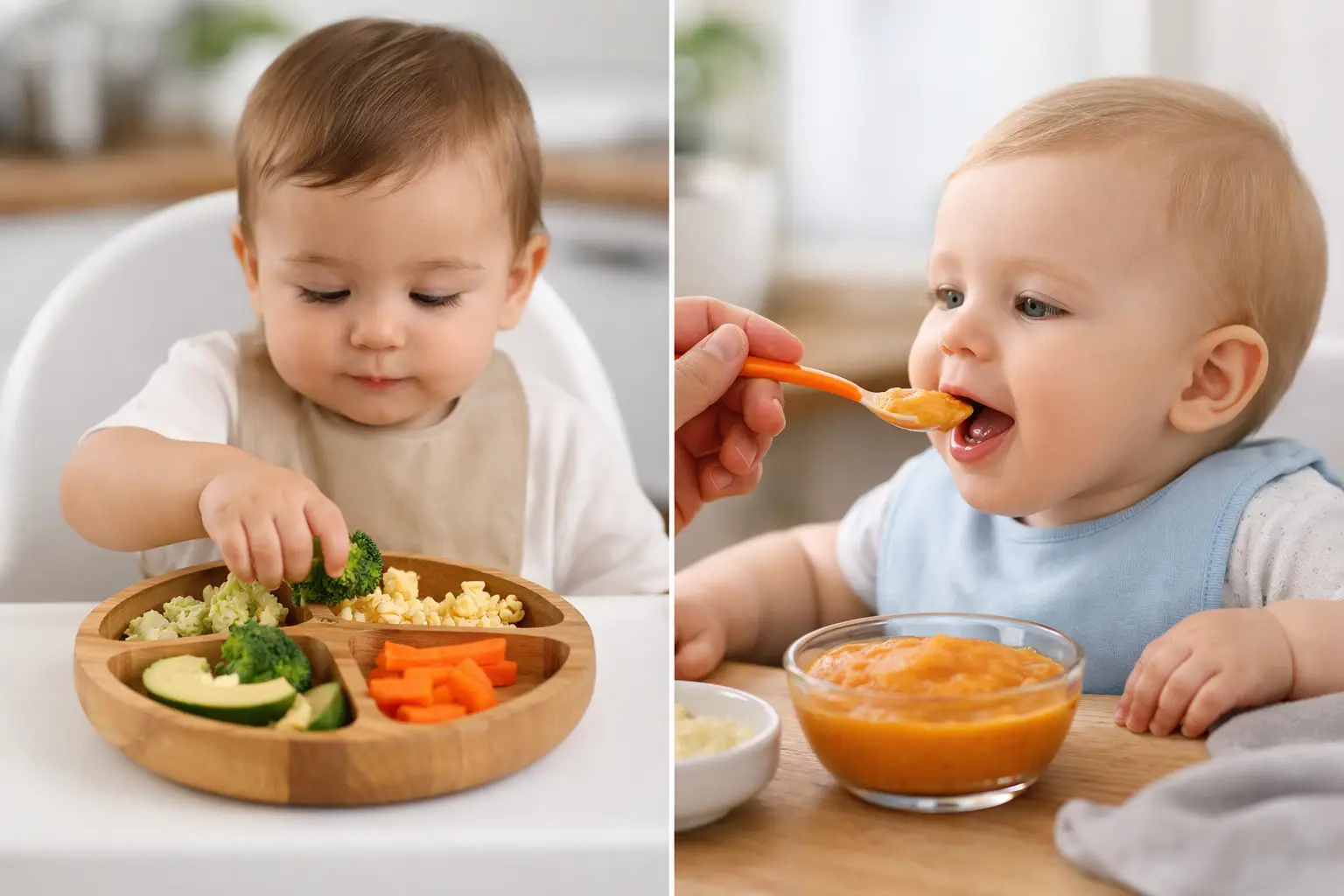
With traditional purees, a caregiver generally offers smooth, mashed, or gradually textured foods on a spoon. The baby begins by accepting food and eventually takes more control as their skills develop.
Baby-led weaning, often called BLW, starts with soft, appropriately sized finger foods that a baby can pick up and bring to their own mouth. Rather than being spoon-fed most bites, the baby explores food independently from the beginning of complementary feeding.
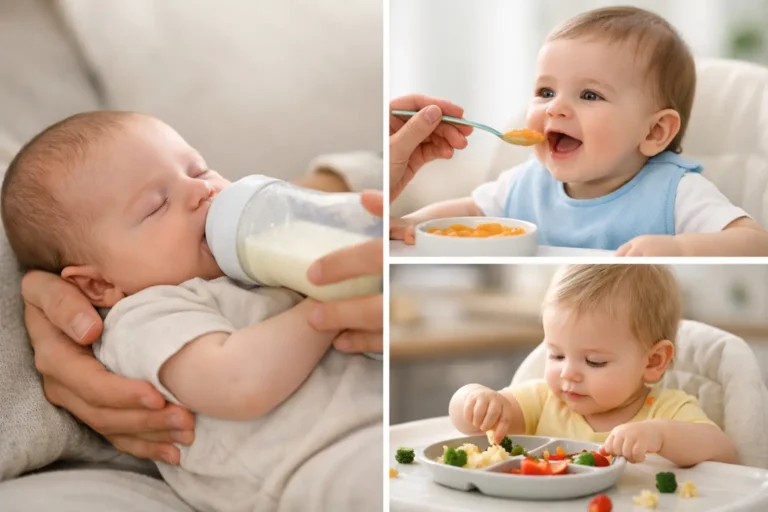
Neither method means breast milk or formula stops right away. For the first year, breast milk or formula remains a baby’s primary source of nutrition. Solid foods begin as practice and gradually become more substantial over time.
When Is a Baby Ready for Solids?
Readiness matters more than whether you choose a spoon or a banana spear. Most babies are ready to begin solids around 6 months, but age alone is not enough. Your baby should be able to sit upright with little support, hold their head and neck steady, and show interest in food.
They also need to be able to bring objects to their mouth and swallow food rather than immediately pushing it out with their tongue. If your baby was born prematurely, has difficulty gaining weight, has low muscle tone, or has known swallowing concerns, speak with their pediatrician before starting solids. Individual guidance can make feeding safer and less stressful.
The Benefits of Baby-Led Weaning
Baby-led weaning gives babies plenty of chances to practice self-feeding. Reaching, grasping, bringing food to the mouth, chewing, and responding to hunger or fullness are all useful skills. It can also make it easier for babies to participate in family meals, since they may eat modified versions of the foods already being served.
Parents often appreciate the shared-meal aspect. A well-cooked broccoli floret, strips of omelet, flaky fish, ripe pear slices, or a soft piece of sweet potato can be placed on the tray while the rest of the family eats. That does not mean every meal will be calm or that your baby will consume much at first. Early BLW meals can be very messy, and a lot of food will end up on the floor.
Some families feel that BLW supports a relaxed relationship with food because babies can set their own pace. But it is not a guarantee that a child will avoid picky eating, eat a wide variety of foods, or become an adventurous eater. Temperament, repeated exposure, family routines, and normal developmental phases all play a role.
The Benefits of Starting With Purees
Purees can feel more predictable, particularly for first-time parents. You can see what food is being offered, introduce new flavors one at a time if that helps you feel organized, and gradually move from smooth textures to mashed and lumpy foods.
This method may also make it easier to offer iron-rich foods in meaningful amounts. Iron needs rise around 6 months, and foods such as meat, beans, lentils, eggs, fortified infant cereal, and tofu deserve regular space on the menu. Pureed or mashed versions can be a practical way to help a baby consume these foods, especially during the early weeks when finger-food intake is small.
Purees are not automatically less responsive or less developmental. A baby can still lead the pace when you offer the spoon and allow them to open their mouth, turn away, grab the spoon, or stop when they are done. Preloading a spoon with a thick puree and letting your baby bring it to their mouth is another helpful middle ground.
Safety Is the Non-Negotiable Part
The biggest concern parents raise about baby-led weaning is choking. Choking is a real risk for any baby eating solids, including babies who eat purees once they move to textured foods. The goal is not to avoid texture forever. It is to serve food in a developmentally appropriate way and supervise every meal closely.
Gagging is also common when babies learn to manage food. It can look alarming, but gagging is a protective reflex and is usually noisy. Choking may be silent or involve an inability to breathe, cough, or cry. Every caregiver should know infant choking first aid and CPR before solids begin.
Avoid hard, round, sticky, or slippery foods that can block a baby’s airway. Whole grapes, nuts, popcorn, chunks of raw apple or carrot, spoonfuls of nut butter, hot dog rounds, hard candy, and chunks of cheese are common hazards. Foods should be cooked until soft and cut for your baby’s age and ability. Grapes and cherry tomatoes should be quartered lengthwise, and nut butter should be spread thinly or mixed into another food.
Your baby should always eat seated upright in a high chair, not reclined, crawling, walking, or riding in a stroller or car seat. Stay within arm’s reach and avoid distractions such as phones. These practical strategies matter far more than whether a meal began as a puree or a finger food.
Nutrition and Allergens: What Both Methods Need
A successful feeding plan includes variety over time, not a perfect plate at every meal. Offer iron-rich foods regularly, along with fruits, vegetables, whole grains, protein foods, and healthy fats. Pairing plant-based iron foods with vitamin C-rich foods, such as beans with strawberries or oatmeal with mashed peaches, can support iron absorption.
Common allergens should generally be introduced in safe forms once your baby is ready for solids, rather than delayed without a medical reason. Think smooth peanut butter thinned into oatmeal, well-cooked egg, yogurt, sesame paste mixed into food, or finely flaked fish. Introduce new allergens earlier in the day when your baby is well, then watch for symptoms such as hives, vomiting, coughing, wheezing, or facial swelling.
If your baby has severe eczema, an existing food allergy, or a history that puts them at higher risk, ask their pediatrician or an allergist for a plan before introducing peanut and other allergens.
A Combination Approach Often Makes Real Life Easier
For many families, the question is not really baby-led weaning versus purees. It is how to use both in a way that works on a Tuesday night when everyone is hungry.
You might offer a preloaded spoon of yogurt alongside soft peach slices at breakfast. At lunch, your baby might eat mashed lentils with a spoon and a strip of soft pita. At dinner, they can have tender shredded chicken, cooked zucchini, and a little applesauce. This approach offers self-feeding practice, texture exposure, and a simple way to serve nutrient-dense foods.
Combination feeding can also reduce pressure. If your baby is tired, teething, or having a day when finger foods are mostly thrown, a puree is still a useful option. If your baby reaches eagerly for your spoon, let them try holding it. Responsive feeding means paying attention to your baby, not following rules that make mealtimes harder.
How to Choose the Approach That Fits Your Family
Choose baby-led weaning if your baby is ready, you are comfortable preparing safe finger foods, and family meals make it practical to offer modified versions of what you eat. Choose purees if you prefer a gradual progression, want a simpler way to offer certain foods, or feel more confident starting with a spoon.
Your choice can change as your baby changes. A baby who begins with purees can move toward textured foods and self-feeding quickly. A baby who starts with BLW can eat yogurt, oatmeal, soups, and mashed foods without it meaning you have abandoned the method.
Feeding is a learned skill, not a test of parenting philosophy. Start with safe foods, stay responsive to your baby’s cues, and give yourselves room to learn together. The meal may be messy, slow, and occasionally rejected, but each small taste and grab is part of your baby’s growing independence.