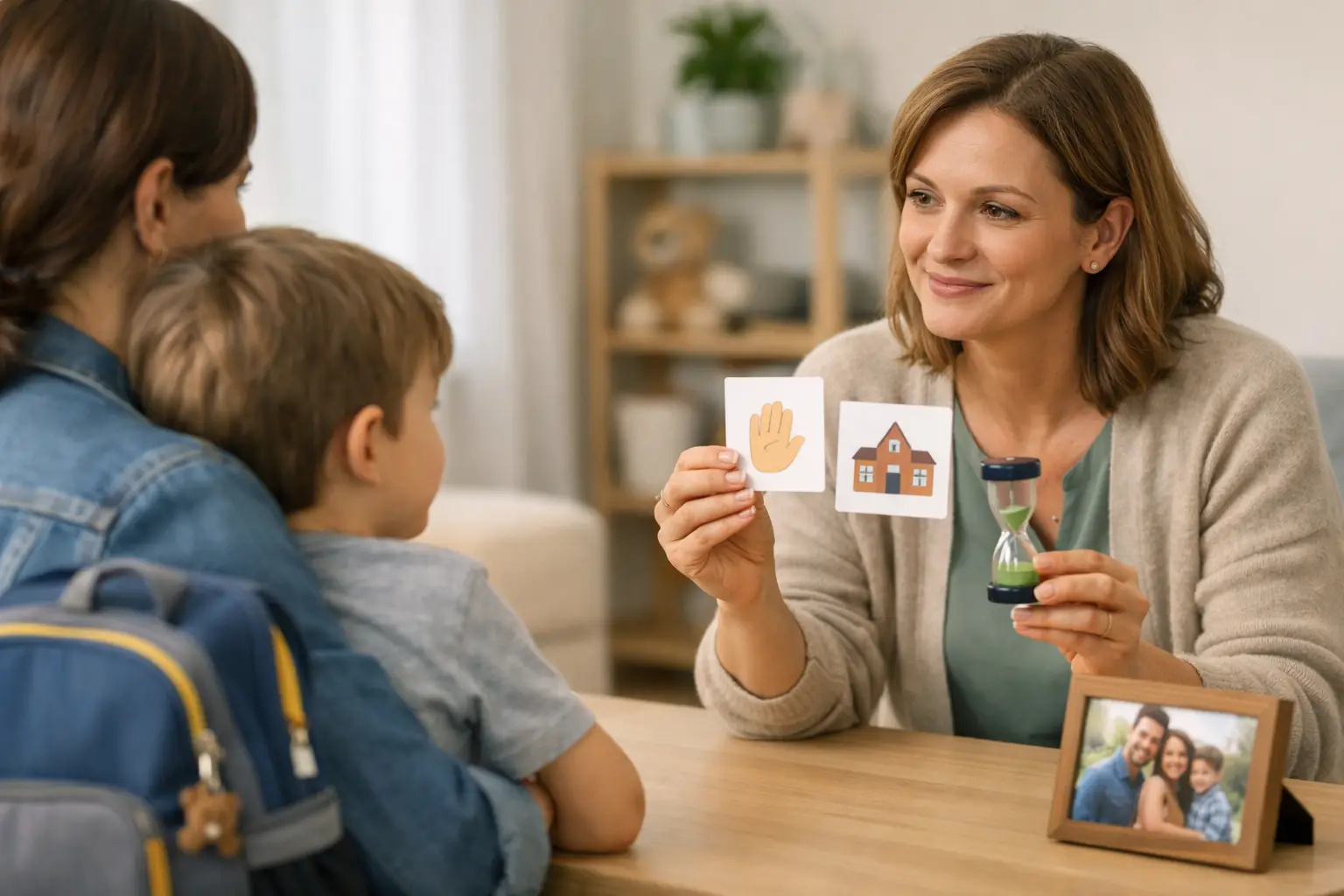
How to Handle Separation Anxiety in Kids
A clingy toddler at preschool drop-off, a baby who cries the moment you leave the room, or a child who suddenly refuses a familiar babysitter can make every goodbye feel painfully long. Learning how to handle separation anxiety starts with recognizing that your child is not trying to make your day harder. They are telling you that being apart feels big, unfamiliar, or unsafe right now.
Separation anxiety is a common and healthy part of early emotional development. Children build strong attachments to the adults who care for them, then gradually learn that those adults can leave and reliably come back. That lesson takes time, repetition, and a calm response from the people they trust most.
What separation anxiety can look like
Separation anxiety often begins around 6 to 9 months, when babies become more aware that a parent can exist outside their immediate view. It commonly peaks between 10 and 18 months, but it can show up again during toddlerhood, preschool transitions, illness, travel, family changes, or a new childcare arrangement.
A child may cry when you leave the room, cling to you in public, resist being held by another trusted adult, wake more often at night, or become upset before daycare and school. Older toddlers and preschoolers may say they do not want you to go to work, repeatedly ask when you will return, or complain of a stomachache before a separation.
The timing and intensity can vary widely. A child who has happily stayed with grandparents for months may become tearful after a vacation or during a developmental leap. That does not mean you have caused a setback. It usually means your child needs extra reassurance while they adjust.
How to handle separation anxiety with confidence
The most helpful approach combines warmth with predictability. Your child needs to feel that you understand their feelings, but they also need you to show them that separations are manageable.
Keep goodbyes short, clear, and consistent
Lingering at the door can accidentally make a goodbye harder. When a parent looks worried, returns several times, or leaves without saying anything, a child may learn that separation is unpredictable or alarming.
Create a simple goodbye routine and use it consistently. It might be one hug, a kiss, a familiar phrase, and a wave from the window. Say where you are going in language your child can understand: “I’m going to work. You will play with Ms. Ana, have lunch, and I will be back after nap.”
Then follow through. Your child may cry, and that is hard to hear, but a calm, loving exit gives them the chance to settle with another caring adult. If you need to cry in the car afterward, that is okay too.
Practice small separations at home
Children build confidence through manageable experiences. Begin with very short separations in a familiar setting, such as stepping into another room while saying, “I’ll be right back.” Return when you said you would.
For a baby, you might talk or sing from the next room so they can hear that you are close. For a toddler, try a brief stay with a familiar caregiver while you run a short errand. Let the time apart grow gradually as your child becomes more comfortable.
The goal is not to make your child stop missing you. It is to help them learn, through experience, that they can be safe and cared for while you are away.
Name the feeling without trying to erase it
Children do not need a lecture about emotions during a tearful goodbye. They do benefit from simple words that help them make sense of what is happening.
Try: “You wish I could stay. It is hard to say goodbye. You are safe with Grandpa, and I will come back after dinner.” This validates the feeling while keeping the boundary clear.
Avoid promises you cannot keep, such as “I’ll be back in one minute,” when you mean several hours. Young children do not understand clock time well, but they do notice when expectations do not match reality. Tie your return to a routine they know, such as snack, nap, or dinner.
Use a comfort item thoughtfully
A familiar object can create a bridge between home and a new setting. A small stuffed animal, family photo, soft blanket, or your handwritten note in a lunchbox may help a child feel connected during the day.
Check the rules if your child is attending daycare or preschool, especially for younger children. Choose something that is safe, easy to carry, and not so precious that losing it would create a new crisis. The item is not meant to replace you. It simply offers a little familiarity while your child practices coping.
Prepare for new routines before the first big goodbye
The first day of daycare, preschool, or a new babysitting arrangement often goes better when it is not the first time your child has seen the place or person. If possible, visit together, meet the caregiver, and spend a little time playing in the new environment before your child stays without you.
At home, talk through what will happen in a matter-of-fact way. Read books about school or caregivers, role-play drop-off with stuffed animals, and point out the parts of the day your child can expect. Preparation will not remove every tear, but it makes the situation less mysterious.
Build connection before and after time apart
A child who is worried about separation may need extra connection at predictable points in the day. Before leaving, put away your phone for a few minutes and give them your full attention. After you return, reconnect before rushing into chores, dinner, or questions about their behavior.
For some families, a small reunion ritual helps. You might sit together for a snack, cuddle and read one book, or take a short walk around the block. This communicates an important message: even when we spend time apart, we find our way back to each other.
What to avoid when your child is upset
It is tempting to sneak away because it prevents an immediate protest. However, disappearing without a goodbye can make children more watchful and worried the next time you move away. A brief, reliable goodbye is usually kinder in the long run.
Try not to shame a child for crying or label them as “too clingy.” Statements like “You’re a big kid, stop crying” can make a child feel embarrassed about a normal need for reassurance. You can encourage bravery without denying their feelings: “You are sad, and you can do hard things. Ms. Ana will help you.”
It can also be unhelpful to repeatedly ask, “Are you okay?” during an anxious moment. This may signal that there is something to fear. Instead, offer calm confidence and a concrete next step: “Let’s hang up your backpack, then we will do our goodbye hug.”
Work with caregivers instead of carrying it alone
When separation happens at daycare, preschool, or with a relative, share your child’s comfort strategies with the caregiver. Let them know what your goodbye routine looks like, what helps your child settle, and whether anything at home may be affecting their emotions.
Then give the caregiver space to build their own relationship with your child. Many children stop crying within minutes after a parent leaves, even when the goodbye was intense. Ask for an update if that would help you, but avoid returning to the room unless the caregiver asks you to. Reappearing can restart the cycle.
If your child remains distressed for a long time each day, work together to adjust the plan. A shorter initial day, a consistent drop-off parent, or a quieter arrival time can make a meaningful difference.
When separation anxiety may need extra support
Most separation anxiety improves with time and consistent practice. Still, it is worth checking in with your child’s pediatrician or a qualified child mental health professional if anxiety is severe, lasts for several weeks without improvement, or regularly prevents your child from participating in age-appropriate activities.
Seek guidance sooner if your child has frequent physical complaints linked to separation, intense panic, ongoing sleep disruption, or fear that interferes with school, childcare, friendships, or family life. Professional support is not a sign that anyone has failed. It can help you understand what is driving the anxiety and find strategies that fit your child.
Your calm presence is one of the strongest tools your child has. Every predictable goodbye, every honest return, and every moment you acknowledge their feelings teaches them something lasting: being apart can feel hard, and they are still safe, loved, and capable of getting through it.