Is Baby Poop Color Normal? A Parent’s Guide
A diaper can look alarming even when your baby is perfectly well. Yellow, green, brown, and even an occasional surprising shade can all show up during infancy. If you are asking, “is baby poop color normal?” the most useful answer is to consider your baby’s age, feeding pattern, recent foods, and how they seem to feel overall.
Color is one clue, not a diagnosis. A cheerful baby who is feeding normally and having ordinary-looking stools usually needs observation, not panic. But a few colors can signal bleeding or a problem with bile flow and deserve a call to your child’s pediatrician.
Is Baby Poop Color Normal? Start With Baby’s Age
The first stools after birth are usually thick, sticky, and nearly black with a dark green tint. This is meconium, the material that collected in your baby’s intestines before birth. It is expected during the first day or two of life.
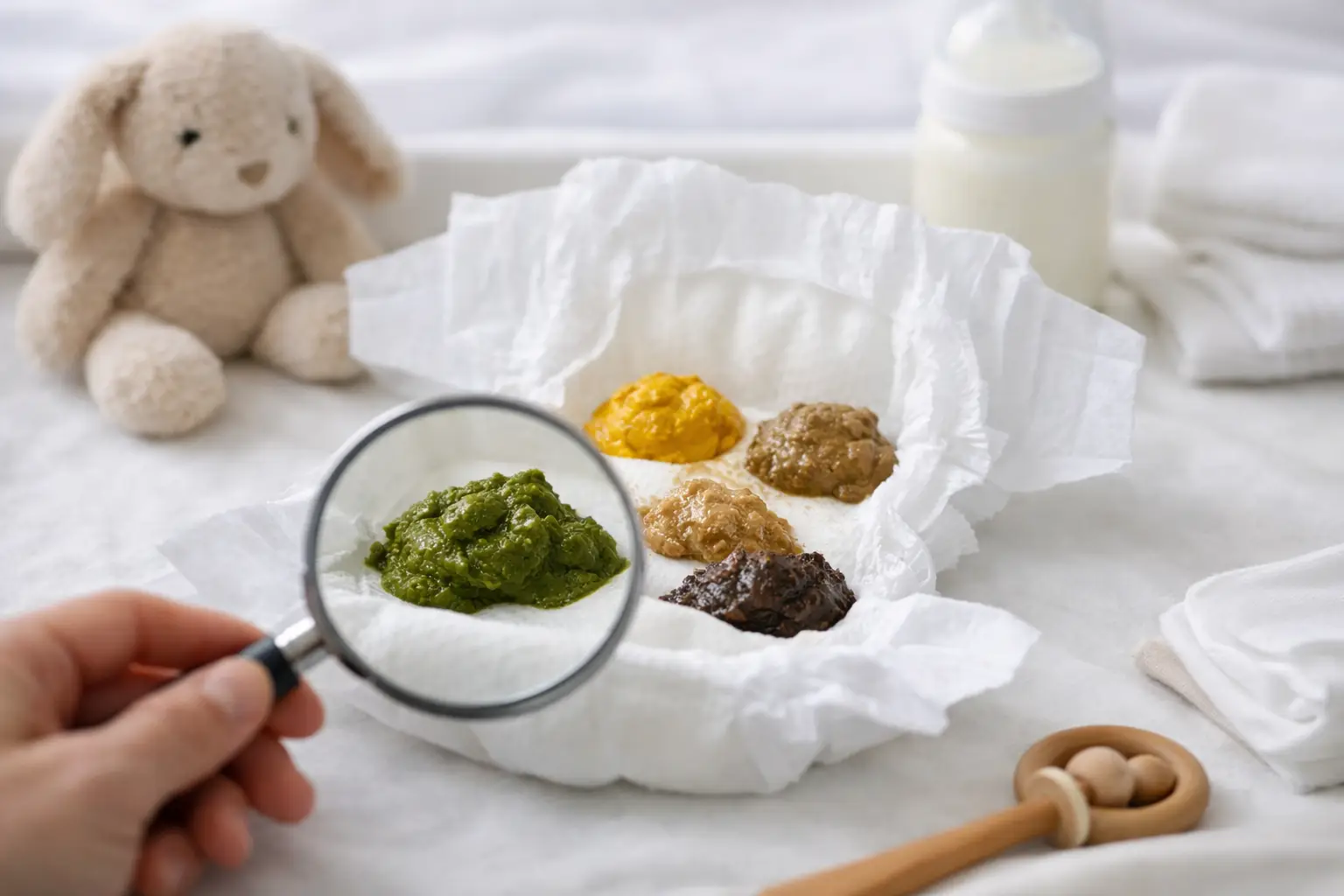
As your baby begins taking breast milk or formula, poop often shifts through greenish-brown transitional stools before settling into a more familiar pattern. Breastfed babies commonly have mustard-yellow stools that may be loose, seedy, and occasionally a little green. Formula-fed babies often have stools that are tan, yellow-brown, or green-brown and somewhat thicker, like peanut butter or soft paste.
Neither feeding pattern is better based on stool color alone. Healthy babies can have a wide range of normal shades, and one diaper rarely tells the whole story. Look for a change that persists, especially if it comes with poor feeding, vomiting, fever, unusual sleepiness, or a baby who seems to be in pain.
What Common Baby Poop Colors Can Mean
Yellow, tan, and light brown
These are common, reassuring colors. Mustard yellow is particularly typical in breastfed babies, while tan and light brown often appear in formula-fed babies and babies who have started solids. As long as the stool is not chalky white or very pale gray, these shades are generally expected.
Green
Green poop is one of the most common reasons parents worry, but it is often harmless. In a breastfed baby, it can happen when stool moves through the digestive tract quickly, during a normal milk supply shift, or after a change in feeding routines. Formula can also create green stools, and iron-fortified formula is a frequent explanation.
Older babies may have green poop after eating spinach, peas, green food coloring, or foods with blue or purple dyes. A single green diaper in an otherwise comfortable baby is usually a wait-and-watch situation. If green stool is very watery and frequent, think more about diarrhea and dehydration than color itself.
Brown
Once babies eat solids, brown poop becomes routine. Its exact shade may change from day to day based on food, including sweet potatoes, berries, beans, meats, and grains. Dark brown is usually normal. Very dark, sticky black stool is different and should be evaluated unless your clinician has already explained that an iron supplement is the cause.
Orange and red-orange
Orange stools commonly follow orange foods such as carrots, squash, sweet potatoes, or foods colored with paprika. Some medicines and supplements can also affect color.
Bright red is more concerning because it can be fresh blood. A small streak can come from a tiny anal fissure, often after a hard stool or constipation. In a newborn, swallowed maternal blood from cracked nipples may also be a possible explanation. Still, any red stool is worth discussing with your pediatrician, particularly if there is more than a small streak, the stool is loose and bloody, or your baby seems unwell.
Black
Black meconium in the first few days is normal. Black stool after the meconium stage can sometimes mean digested blood from higher in the digestive tract. Iron supplements may also make stool dark green or blackish, so context matters.
If your baby has black, tar-like poop after the newborn period and is not taking an iron supplement that your clinician has discussed with you, call the pediatrician promptly. Seek urgent care if your baby also appears pale, weak, unusually sleepy, or is vomiting blood.
White, gray, or clay-colored
White, pale gray, or clay-colored poop is not a normal variation to ignore. It can mean too little bile is reaching the stool, which may point to a liver or gallbladder concern. Call your child’s pediatrician the same day if you see this color, especially if it happens more than once or your baby has yellowing of the skin or eyes.
Feeding, Supplements, and Solids Change the Diaper
Many normal poop changes have a simple explanation. Formula brand changes can affect both color and texture. Iron drops can turn stools dark green. Antibiotics may lead to looser stools or temporary color changes. Once solids begin, the diaper often becomes a surprisingly accurate record of yesterday’s menu.
Beets can create red or pink stools, blueberries can make stool dark, and leafy greens can produce green poop. Tomatoes and red food dye can also mimic blood. If you suspect food is responsible, think back over the previous day or two, but do not assume that every red diaper is food-related. When you are unsure, take a clear photo before tossing the diaper and contact your pediatrician’s office for guidance.
A breastfed baby can also react to an illness, a temporary change in nursing frequency, or a feeding pattern that moves milk through the gut more quickly. Parents sometimes hear that green stool means a baby is getting only “foremilk.” That explanation is often oversimplified. If your baby is gaining weight, nursing effectively, and seems comfortable, green stools alone usually do not mean you need to change how you breastfeed. A lactation professional or pediatrician can help if you have concerns about supply, feeding pain, slow weight gain, or persistent watery stools.
Color Matters Less Than the Whole Picture
The texture and frequency of poop can be just as useful as its color. Breastfed newborns may poop after nearly every feed, while some older breastfed babies go several days between soft stools. Formula-fed babies may be more regular, but there is still a broad healthy range.
Constipation is not defined by skipping a day. It is more about hard, dry, pellet-like stools that are painful to pass. Diarrhea is more than a loose-looking breastfed diaper. It is a clear increase in watery stools, often with a sudden change from your baby’s usual pattern.
Pay close attention to hydration when diarrhea is possible. Fewer wet diapers, a dry mouth, no tears when crying in an older baby, a sunken soft spot, or marked lethargy can be signs that your baby needs medical care quickly.
When to Call the Pediatrician About Baby Poop Color
Call the pediatrician the same day for white, gray, clay-colored, red, or black stools after the early meconium phase. It is also wise to call for ongoing watery diarrhea, mucus with blood, repeated vomiting, a swollen belly, poor feeding, or a noticeable change in your baby’s behavior.
For babies younger than 3 months, a rectal temperature of 100.4°F or higher needs prompt medical advice, even if poop color is the issue that first caught your attention. Get urgent help if your baby is hard to wake, struggling to breathe, showing signs of dehydration, or has significant bleeding in the diaper.
Trust your observations. You know what is typical for your child, and it is always reasonable to call when something looks distinctly different. A photo, notes about recent foods or supplements, and a quick description of feeding and wet diapers can help the medical team give clear next steps.
Diapers are messy data, not a parenting test. Notice the pattern, watch your baby as much as the diaper, and let your pediatrician help with the colors that fall outside the usual range.