How to Prepare a Toddler for a Sibling Before Birth
The baby may be growing quietly in your belly, but your toddler is already noticing the changes: a crib coming out of storage, more tired afternoons, adults asking whether they are excited to be a big sibling. To prepare a toddler for a sibling, focus less on creating instant excitement and more on helping them feel safe, included, and sure that they still belong.
Toddlers can understand that a baby is coming, but they do not yet grasp time, permanent changes, or the demanding reality of newborn care. A calm, gradual approach gives your child room to ask questions, practice new routines, and adjust without feeling pushed aside.
When to start talking about the new baby
There is no single right time to share the news. Many families begin once the pregnancy feels established and they are ready to talk about it openly. For a younger toddler, telling them too early can be confusing because “after the baby is born” is not a meaningful timeline. For an older toddler or preschooler, more time can help them process the change.
Keep the first conversation simple: “A baby is growing in my belly. The baby will live with us after it is born, and you will be their big sibling.” Then return to the topic in small, natural moments rather than turning every conversation into a lesson about the baby.
Your toddler may respond with excitement, indifference, or a request for a snack. All are normal. Their feelings may also change from day to day. You do not need to convince them that becoming a sibling is wonderful. Let them know every feeling is allowed while keeping the message steady: your family is growing, and you will take care of them through the change.
Use concrete language they can understand
Avoid promising that the baby will be a ready-made playmate. A toddler who expects someone to build blocks with them may feel disappointed when the new baby mostly sleeps, cries, and feeds. Try language such as, “Babies need a lot of help at first. They cannot play yet, but you can show them how our family does things.”
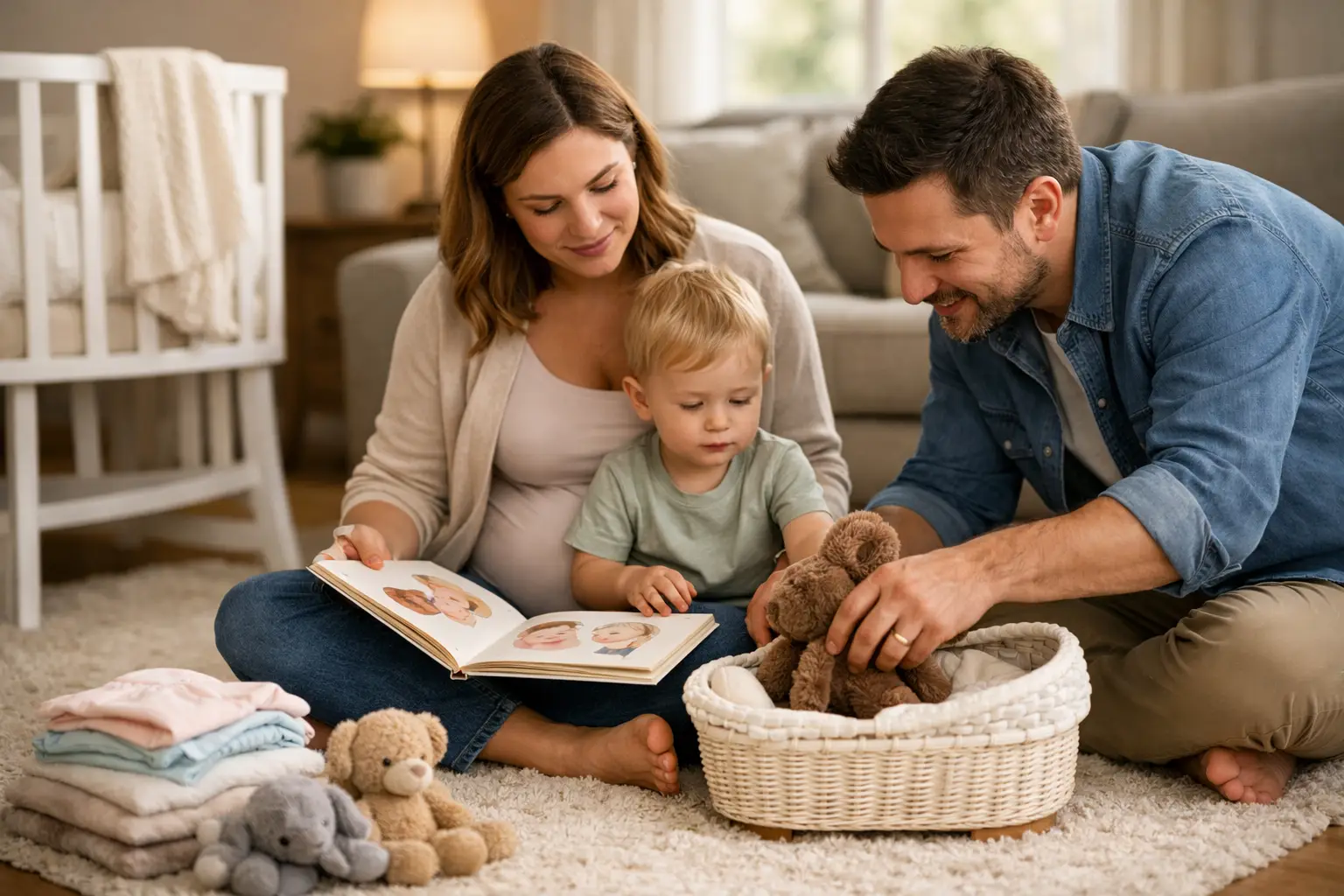
Picture books about new siblings, looking at baby photos, and noticing babies during everyday outings can make the idea more familiar. If your toddler seems interested, let them gently touch baby gear or help choose a small item for the nursery. If they are not interested, do not force it. Inclusion works best when it feels like an invitation, not an assignment.
Prepare a toddler for a sibling by protecting routines
A new baby changes family life, but toddlers do better when the most predictable parts of their day remain predictable. Before delivery, identify the routines that matter most to your child. This might be their morning cuddle, daycare drop-off ritual, favorite bedtime book, or Saturday pancakes.
You may not preserve every routine exactly, especially during the first weeks. Still, consistency around meals, sleep, and transitions gives a toddler reassurance when everything else feels different. If another caregiver will handle more baths, pickups, or bedtime after the birth, start practicing that arrangement before the baby arrives. A familiar routine with Dad, a grandparent, or another trusted adult is much easier to accept before everyone is tired and overwhelmed.
Try not to make several major changes at once. If you are planning potty training, moving your toddler to a new bedroom, taking away a pacifier, or transitioning from a crib to a bed, consider the timing carefully. Some children handle change well; others need one adjustment at a time. When possible, complete a transition several months before the due date or wait until family life has settled.
Give your child a role, not a responsibility
Toddlers often like feeling capable. Offer small choices that communicate, “You are part of this family team.” They can choose a blanket to bring to the hospital, help put diapers in a basket, or pick a book to read near the baby.
The key is keeping help optional and specific. Saying, “You are the big sibling, so you need to help,” can create pressure and resentment. Instead, say, “Would you like to bring me a diaper, or would you rather color while I change the baby?” Both choices respect their place in the family.
Praise effort without making your toddler responsible for your emotional well-being. Rather than, “You are such a good helper. I need you to be good for Mommy,” try, “You brought the wipes when I asked. That was helpful.” Clear, realistic feedback builds confidence without asking too much of a young child.
Make a plan for the hospital and first reunion
The birth is often a toddler’s first experience of being apart from a parent unexpectedly or overnight. Explain the plan ahead of time in simple terms: who will stay with them, where they will sleep, and when they may see you again. Repeat it as the due date gets closer.
Pack familiar comforts for their caregiver, such as a favorite stuffed animal, pajamas, and the usual bedtime items. If possible, have the caregiver spend some low-pressure time with your toddler before labor begins. Familiarity can make a difficult separation feel more manageable.
When your toddler meets the baby, keep expectations low. They may want to say hello immediately, hang back, focus on the hospital buttons, or ask to go home. Let them warm up at their own pace. If you can, have another adult hold the baby briefly when your toddler first sees you, so you can offer a genuine hug and reconnect.
Some parents choose a small gift “from the baby.” It can be a sweet gesture, but it is not necessary. Your attention, warmth, and a calm reunion will matter more than any present.
Expect big feelings after baby comes home
Even a toddler who seemed thrilled during pregnancy may struggle once the baby is home. Jealousy can look like clinginess, tantrums, sleep disruption, baby talk, toileting accidents, or sudden demands to be carried. These behaviors are usually a request for reassurance, not proof that your child is being difficult or that you prepared them poorly.
Name what you see without shaming them: “You wish I could keep playing when the baby cries. It is hard to wait.” Then hold the boundary if needed: “I will help the baby first, and then I will sit with you for two minutes.” Your calm response teaches that feelings are safe, even when the answer is not always yes.
Aim for short, reliable periods of individual connection rather than waiting for a perfect free hour. Ten minutes of floor play after daycare, a special bedtime chat, or having one parent take the toddler outside while the other stays with the baby can make a real difference. Tell your child when their turn is coming and follow through whenever you can.
It also helps to let your toddler hear you occasionally ask the baby to wait: “Baby, I hear you. I am helping your big sibling put their shoes on first.” The baby does not understand the words, but your toddler does. These small moments show that family attention is not a competition they have already lost.
Keep safety boundaries calm and firm
Toddlers need close supervision with a newborn, even when they are loving and gentle. Teach simple rules: use gentle hands, keep small toys away from the baby, and ask an adult before picking up or feeding the baby. Demonstrate what gentle touch looks like and praise it when you see it.
If your toddler hits, throws something near the baby, or seems rough, intervene immediately and matter-of-factly. Move the baby to safety, block the behavior, and say, “I will not let you hit. You are upset. I am here to help you calm down.” Avoid labeling your child as mean or jealous. The behavior needs a limit, but your toddler still needs help handling the feeling underneath it.
Let the relationship grow slowly
Sibling closeness cannot be manufactured in the first days or months. Your toddler may adore the baby, ignore them, or feel both protective and frustrated. All of those reactions can exist in the same week.
Your goal is not to create a picture-perfect sibling bond. It is to create a home where your toddler feels secure enough to adjust, express big feelings, and learn that love expands as the family changes. With steady routines, honest language, and small moments of connection, your child can step into this new role in their own time.