
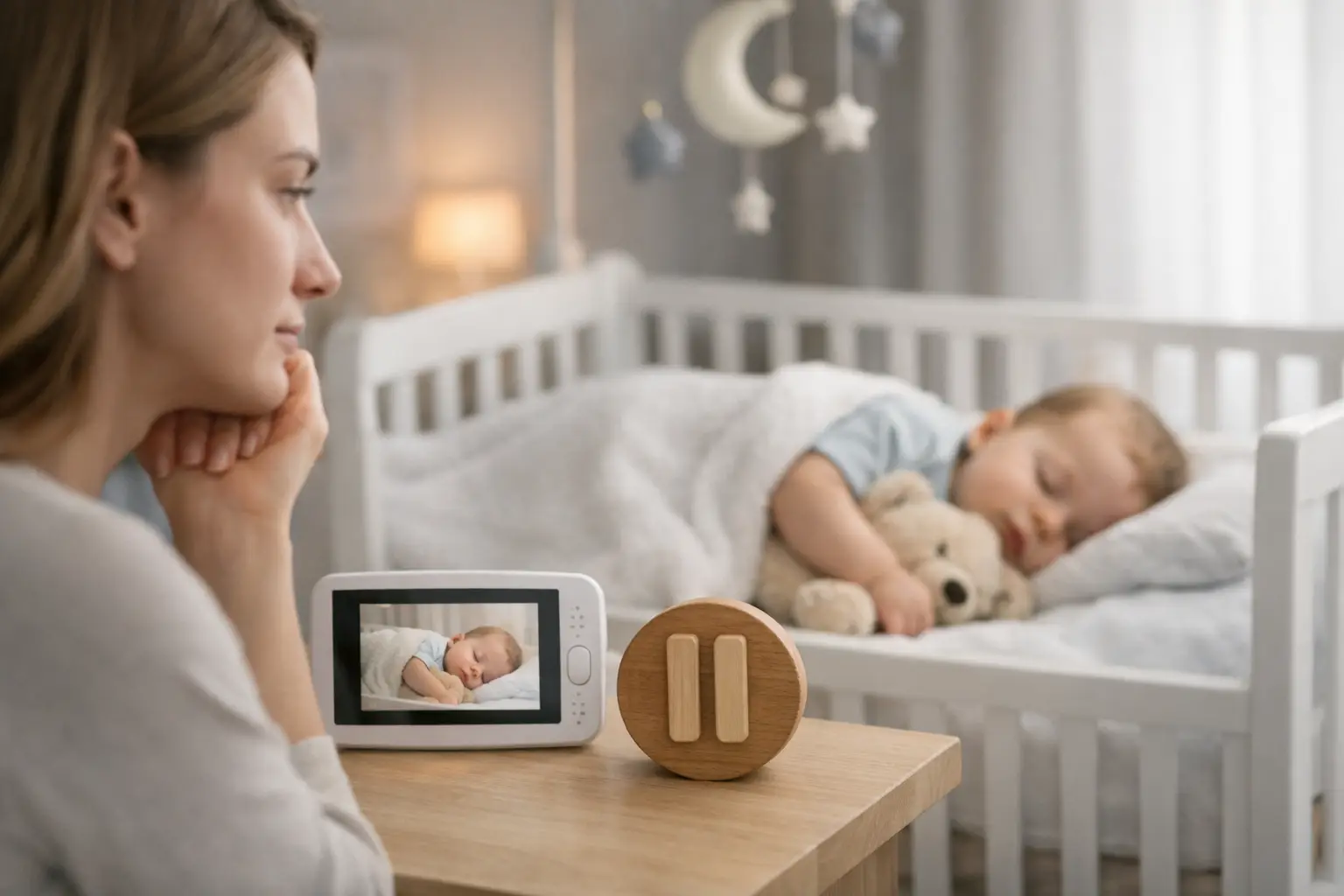
When to Pause Sleep Training
You finally commit to a sleep plan, brace yourself for a few hard nights, and then something changes. Your baby gets sick, bedtime turns into panic, or naps fall apart so badly that the whole house feels tense. That is usually when parents start asking when to pause sleep training, and it is a smart question. Sleep training is not something you need to force through at all costs.
In many cases, consistency helps. But there are also moments when pressing pause is the better call for your baby, your family, and your long-term progress. Knowing the difference can save you from dragging out a rough stretch that is not setting anyone up for success.
When to pause sleep training right away
There are a few situations where pausing is usually the most practical and compassionate choice.
Your baby is sick
If your baby has a fever, congestion, vomiting, diarrhea, an ear infection, or anything else that clearly makes them uncomfortable, this is not the time to hold tightly to a sleep training plan. A sick baby may need more soothing, extra feeds, or more frequent check-ins. Even babies who normally self-settle often struggle when they do not feel well.
The goal during illness is comfort and recovery. Once your baby is feeling better and back to eating and sleeping more normally, you can return to your routine. A short pause during sickness does not erase all your progress.
There is a major schedule disruption
Travel, moving, holidays, houseguests, or a sudden childcare change can throw off sleep in a way that makes training much harder. If your baby is sleeping in a new space, missing naps, or staying out later than usual, it may be unrealistic to expect steady progress.
This does not mean every small disruption requires stopping. But if the routine is so inconsistent that your baby cannot practice the skill you are trying to teach, a pause makes sense. Sleep training tends to work best when bedtime, naps, and the sleep environment are fairly predictable.
Your baby seems unusually distressed
Sleep training usually involves some protest. Crying alone does not automatically mean something is wrong. But if your baby’s crying sounds panicked, escalates instead of settling, or feels very different from normal fussing, it is worth stepping back.
Parents often know when a cry sounds off. Trusting that instinct does not mean you are failing. It means you are paying attention. Sometimes the issue is overtiredness, illness, hunger, or a schedule mismatch rather than resistance to the method itself.
You are seeing signs of exhaustion in yourself
This part matters more than many parents expect. If you are so sleep-deprived, anxious, or emotionally worn down that you cannot follow the plan calmly or consistently, it may be time to pause. Sleep training is hard enough without trying to do it while running on fumes.
A break can help you regroup, adjust the plan, or get support from a partner before trying again. Pushing through when you feel overwhelmed often creates more inconsistency, and inconsistency usually makes sleep training harder.
Times when you might pause sleep training, but it depends
Not every rough patch means stop immediately. Some situations call for a closer look.
Teething
Teething gets blamed for a lot of sleep issues, but not every wake-up is caused by teething pain. Mild teething discomfort does not always require pausing sleep training. If your baby is otherwise acting like themselves, eating normally, and only showing typical signs like drooling or chewing, you may be able to continue.
If teething seems severe and your baby is clearly miserable, a short pause may be the kinder option. This is one of those situations where the intensity matters more than the label.
Sleep regressions
A regression can make sleep training feel like it suddenly stopped working. Your baby may fight bedtime, wake more often, or take short naps. But a regression is not always a reason to stop. Sometimes staying steady through the disruption helps your baby return to better sleep faster.
The better question is whether your baby is going through a temporary developmental shift while still healthy and generally settled, or whether the whole situation has become chaotic and unsustainable. If it is the first, consistency may help. If it is the second, a reset could be more useful.
Developmental milestones
Learning to roll, crawl, pull up, or walk can absolutely affect sleep. Some babies wake to practice new skills or get stuck in awkward positions. This can be frustrating, but it does not always mean you need to stop sleep training.
You may just need to give extra daytime practice, tweak the schedule, or allow a little time for the novelty to wear off. If your baby is intensely unsettled for several nights and cannot calm at all, then a short pause might help.
Signs your sleep training plan may need adjustment, not a full stop
Sometimes parents wonder when to pause sleep training when the real issue is that the plan itself is off.
If bedtime is too early or too late, your baby may not be tired in the right way. If naps are inconsistent, your baby may be overtired by bedtime and cry harder than expected. If your method does not match your comfort level, you may start second-guessing every step.
Look at the basics first. Is your baby getting enough daytime sleep for their age? Are wake windows reasonable? Is bedtime happening at a predictable time? Are feeds, sleep cues, and the bedtime routine supporting the process?
A lot of sleep struggles improve when the schedule improves. Pausing can help if you need a day or two to reset those foundations, but you may not need to abandon the whole effort.
How to pause sleep training without losing all your progress
If you do decide to stop for a bit, try not to swing from one extreme to another. You do not need a perfect pause, but some structure helps.
Keep the bedtime routine as consistent as possible. If your baby is sick or going through a disruption, offer the comfort they need while still signaling that sleep is coming. Bath, pajamas, feeding, books, cuddles, and a calm room can anchor the night even if the usual training steps are on hold.
Try to protect age-appropriate wake windows and a realistic bedtime. Even when life is messy, an overtired baby usually has a harder time sleeping.
If you are adding more support, do it intentionally. Rocking, feeding, or holding your baby through a hard week is not a problem. It only gets confusing when the response changes wildly from one night to the next with no clear reason.
When to start again after pausing sleep training
Most families are ready to restart when the original problem has clearly improved. That could mean your baby has been fever-free for a couple of days, travel is over, the new routine is in place, or you feel emotionally ready to be consistent again.
It often helps to treat the restart like a fresh beginning instead of assuming your baby should pick up exactly where they left off. You may need a night or two of adjustment. That is normal.
If the first attempt felt miserable from the start, consider whether a different method would be a better fit. Some families do better with gradual check-ins, while others find that too stimulating and prefer a simpler approach. The best plan is the one you can follow calmly and consistently.
A simple question to guide your decision
If you are stuck on when to pause sleep training, ask yourself this: is my baby having a hard time, or is my baby being asked to learn a hard skill under reasonably good conditions?
That distinction matters. Learning to sleep independently can be frustrating, and some protest is normal. But if your baby is sick, overwhelmed, off-schedule, or clearly not in a good place to learn, pausing is not giving up. It is adjusting to reality.
Parents often worry that one pause will ruin everything. In real life, sleep is rarely that fragile. Babies go through illness, travel, growth spurts, and developmental changes. What helps most over time is not perfect execution. It is responding thoughtfully, staying as consistent as you reasonably can, and returning to your plan when your child is ready.
If sleep training needs to wait for a few days or even a couple of weeks, that does not mean you missed your chance. It means you are making a practical parenting decision based on what your baby needs right now. And that kind of flexibility is often what makes a sleep plan work better in the long run.