How to Choose a Baby Sound Machine Safely
A baby sound machine can feel like a small miracle at 2 a.m. when the dishwasher clicks on, a dog barks down the street, or an older sibling starts their day before the baby is ready. Used thoughtfully, it can soften household noise and give your child a familiar cue that it is time to rest. But the best results come from more than pressing play. Volume, placement, and the way you use it in your routine all matter.
What a Baby Sound Machine Can and Cannot Do
Steady background sound can help mask sudden, inconsistent noises that might wake a lightly sleeping baby. It may be especially helpful in apartments, shared bedrooms, homes with other children, or during travel when your usual sleep environment is not available. Many parents also find that using the same sound at nap time and bedtime creates a predictable rhythm their baby begins to recognize.
That does not mean a sound machine will fix every sleep challenge. A baby who is hungry, uncomfortable, sick, overtired, or going through a developmental change may still wake often. Sleep regressions, teething discomfort, and changing nap needs call for a broader look at your child’s routine. Think of sound as one supportive part of a sleep environment, not a solution that has to carry the whole night.
Some babies also simply do not respond strongly to white noise. If your child seems unsettled by it, sleeps the same without it, or becomes more alert when it turns on, there is no need to force the habit.
How to Choose a Baby Sound Machine
The most useful machine is usually not the one with the longest list of features. It is the one you can set safely, use consistently, and operate without fumbling through an app during a middle-of-the-night wake-up. Start with the sounds themselves. A continuous, neutral sound such as white noise, brown noise, rainfall, or a fan-like hum tends to work better for sleep than a song with obvious changes, lyrics, or a cheerful melody that can capture your baby’s attention.
As you compare options, focus on four practical features:
- Reliable volume control: Choose a device with small, adjustable volume steps. You want enough range to gently cover everyday noise without needing to turn it high.
- Continuous playback: A machine that runs all night can prevent a baby from waking when a timer ends. A timer can still be useful for daytime naps if it fits your routine.
- Simple controls: Physical buttons can be easier than a phone app when you are tired, traveling, or trying not to bring a bright screen into the nursery.
- A power option that fits your family: Plug-in machines are dependable for home use, while rechargeable models can be convenient for stroller naps, hotel rooms, and grandparents’ houses.
Night lights, projections, and recordings may sound appealing, but they are not necessary for good sleep. For some babies, extra light and changing visuals are stimulating rather than calming. A simple machine with one sound you use consistently is often enough.
Safe Baby Sound Machine Placement and Volume
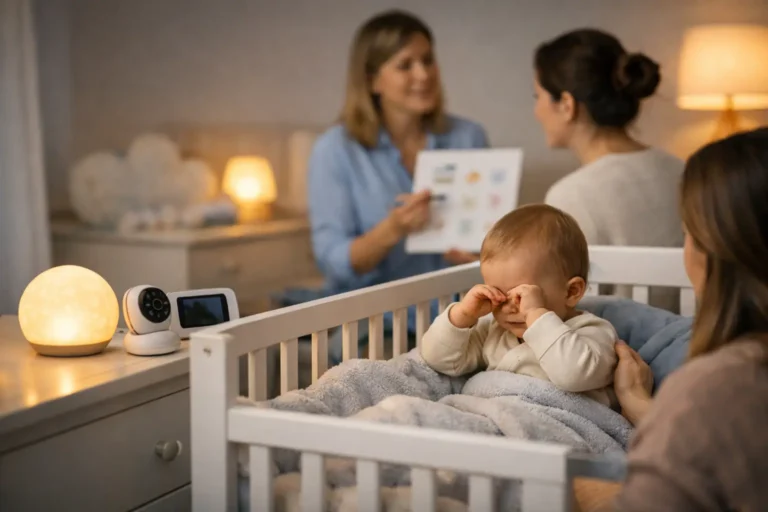
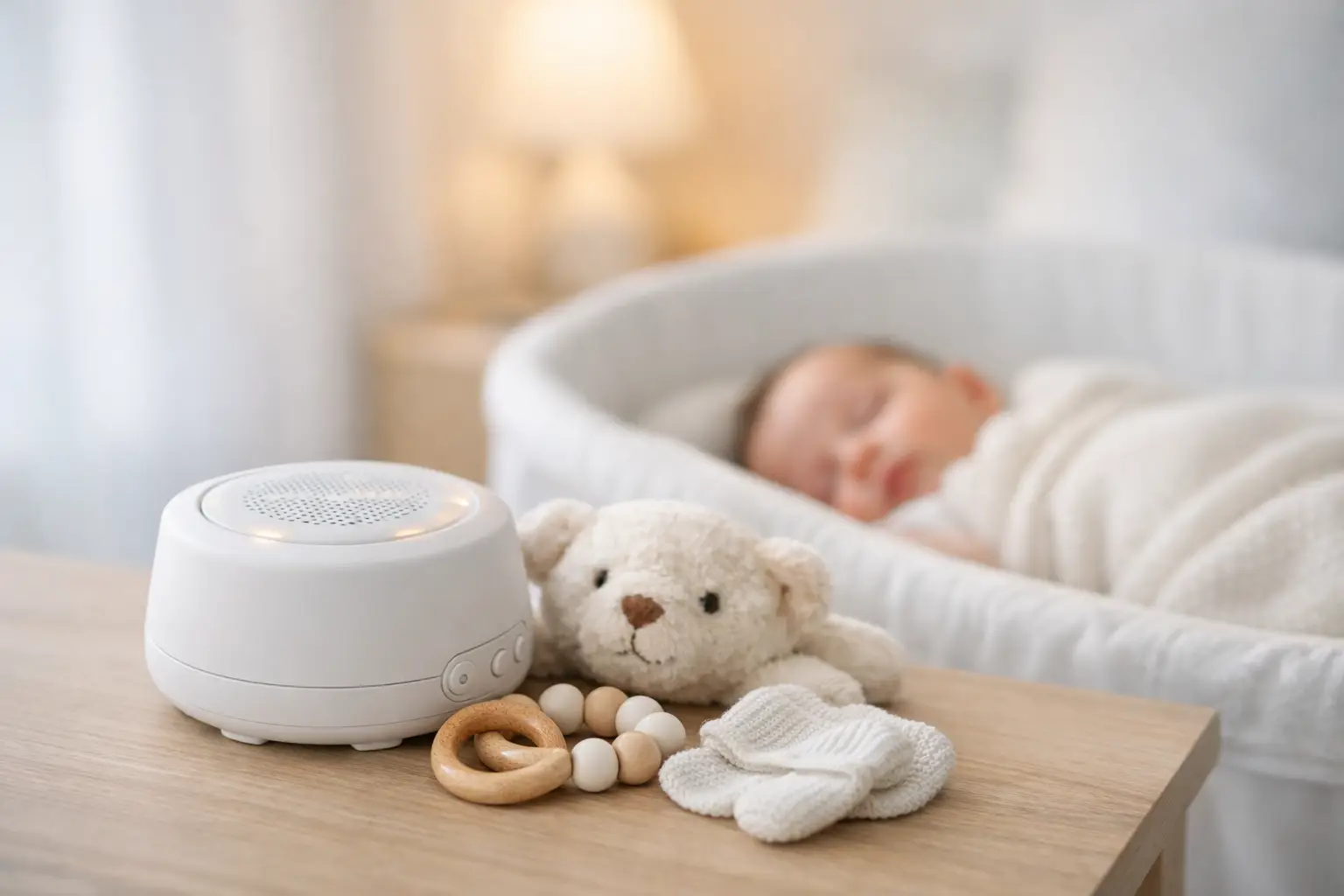
A sound machine belongs across the room, not in or attached to the crib. Keep it well away from your baby’s head and out of reach of little hands. If the device has a cord, make sure the cord cannot reach the crib, bassinet, play yard, or changing area. Cords should be secured and kept completely away from the sleep space.
Volume deserves the same attention. Babies do not need loud sound to benefit from noise masking. Set the machine at a low, comfortable level, then step outside the room or stand where you would normally pause at the doorway. You should not hear an overpowering roar. If you need to raise your voice to speak over it from nearby, it is too loud.
Phone decibel apps can offer a rough reference, but they are not perfectly accurate and should not replace common sense. Keep the volume low, place the device far from the crib, and avoid turning it up to compete with a loud TV, party, construction noise, or other ongoing disturbance. When outside noise is unusually loud, moving your baby to a quieter room may be the better choice.
The machine should also stay away from the sleep surface. Do not place it under the crib, inside the bassinet, or next to your baby with the idea that lower placement makes the sound gentler. A safe infant sleep space remains simple: a firm, flat surface with a fitted sheet and no loose blankets, toys, or devices.
Should You Use a Timer?
There is no single right answer. A timer can be useful if you prefer the sound to fade after your child falls asleep. However, some babies wake when the sound stops, particularly if the room becomes suddenly quiet or household noise starts again. Continuous sound is often more practical for overnight sleep, as long as the volume and placement are safe.
For naps, a timer may work well if it does not interrupt your baby’s sleep. Try one approach for several days before changing it. Constantly adjusting the sound, volume, and timing can make it harder to tell what is actually helping.
Use Sound as a Sleep Cue, Not a Sleep Crutch
Parents sometimes worry that using white noise means their child will never sleep without it. In reality, many children can adapt to different sleep environments over time. Familiar sound can be a useful cue, much like dimming the lights, changing a diaper, reading a short book, and offering a final cuddle before bed.
The key is to keep the whole routine manageable. If your baby only falls asleep when you are holding them while the sound plays, the bigger challenge may be the hands-on settling pattern rather than the machine. You can still use the sound while gradually building other bedtime skills, such as placing your baby down calm and sleepy or allowing a brief pause before responding to every small noise.
If you decide to phase out the machine later, do it gradually. Lower the volume a little every few nights, move it farther from the sleep area, or use it only for bedtime before removing it from naps. A slow change is usually easier than abruptly taking away a familiar cue during a stressful week.
When a Sound Machine Is Not Enough
If your baby suddenly begins waking much more often, look beyond the nursery setup. Check for common issues such as illness, fever, nasal congestion, reflux symptoms, eczema itching, a wet diaper, or a schedule that no longer matches their sleep needs. For newborns, frequent waking to feed is normal and necessary. No sound machine should be used to encourage a young baby to sleep through feeds they still need.
Call your pediatrician if your baby has unusual sleep changes alongside symptoms such as trouble breathing, poor feeding, fever, signs of dehydration, persistent pain, or extreme difficulty settling. Trust your instincts. A machine can create a calmer room, but it cannot tell you why your child is uncomfortable.
Common Questions About Baby Sound Machines
Is white noise or brown noise better for babies?
Neither is universally better. White noise is brighter and more hiss-like, while brown noise has a deeper, softer rumble. Some parents prefer brown noise because it feels less sharp, but the best choice is the quiet, steady sound your baby tolerates well. Keep the volume low whichever sound you choose.
Can a baby sound machine stay on all night?
Yes, many families use continuous sound overnight. The safer approach is to keep the device across the room, away from the crib, and set to a low volume. If your baby sleeps well with a timer, that is fine too.
Can I use a sound machine from the newborn stage?
You can use low, steady background sound from the newborn stage, provided the device is positioned safely and not played loudly. Newborn sleep is still irregular, and they need frequent feeds, so use the machine to reduce disruptive noise rather than to push a schedule before your baby is ready.
A calmer sleep space can make hard nights feel a little more manageable. Choose a simple sound, set it low and far from the crib, and let the rest of your routine do its quiet, steady work.