Preschool Versus Kindergarten for Your Child
The question of preschool versus kindergarten often arrives with a deadline attached: enrollment forms, a school tour, and a child who may seem both very little and suddenly very grown up. The good news is that this is not a test of your parenting. It is a decision about fit, timing, and the kind of support that will help your child enter their next stage with confidence.
Preschool versus kindergarten: the basic difference
Preschool is an early learning program for children before kindergarten. It is usually available for ages 3 to 4, although some programs begin at age 2 and others offer a pre-kindergarten class for 4-year-olds. Most preschool programs are optional and may be run by private schools, child care centers, faith-based organizations, Head Start programs, or public school districts.
Kindergarten is generally the first year of elementary school. Most children begin at age 5, though the exact eligibility date depends on your state’s cutoff and local district rules. Public kindergarten is widely available in the United States, but whether it is mandatory varies by state. Some districts offer full-day kindergarten, while others offer a half-day schedule.
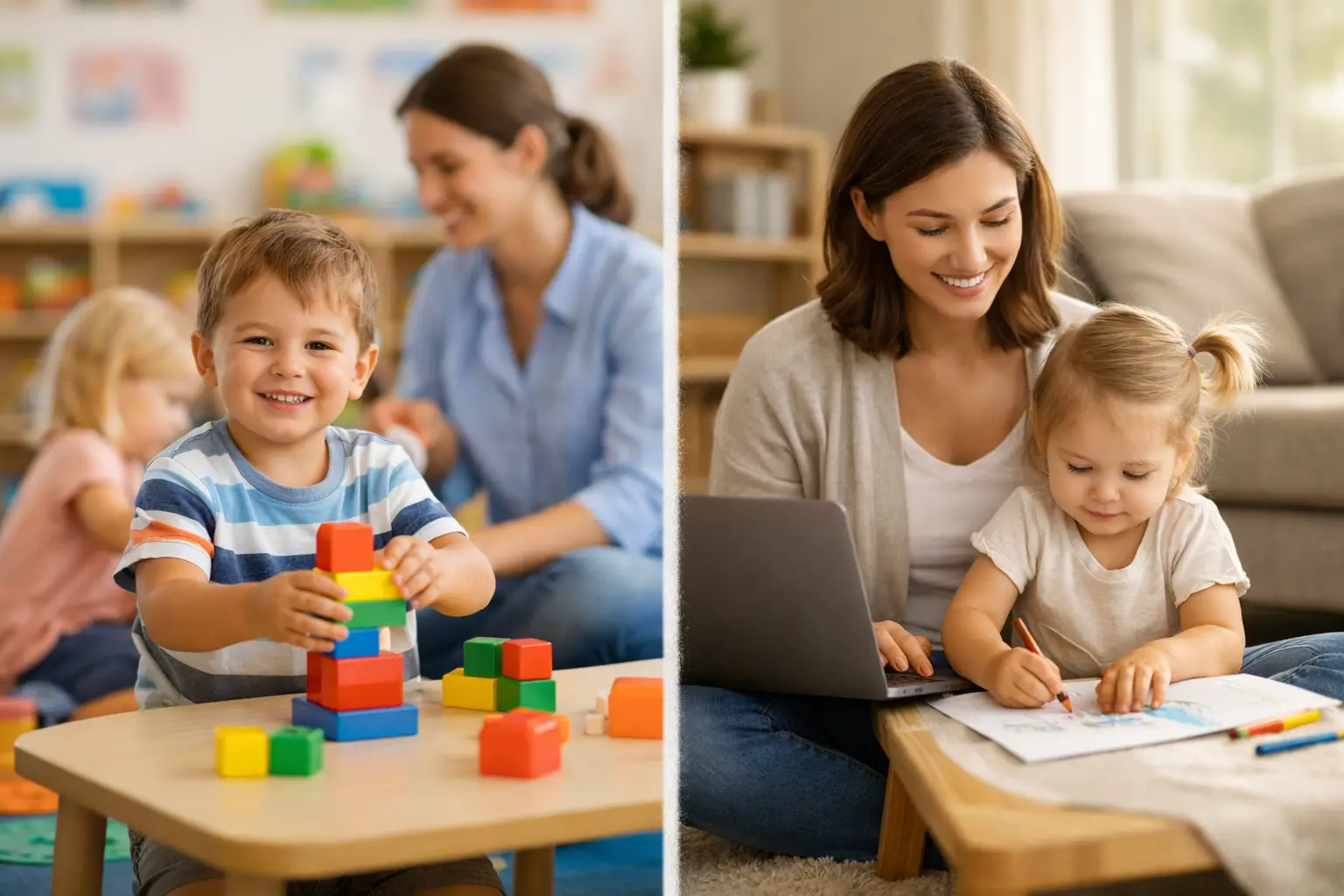
The simplest distinction is that preschool introduces children to group learning, routines, and social experiences. Kindergarten builds on those skills with a more formal school-day structure and a stronger focus on early academic learning.
What children do in each setting
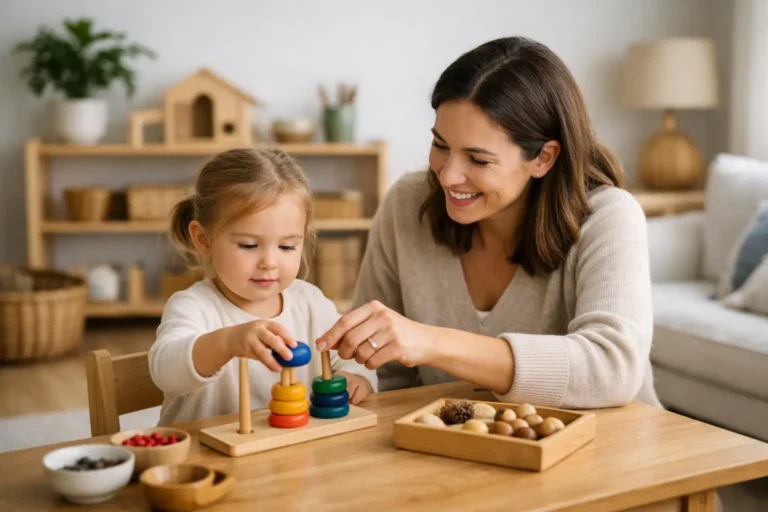
Preschool learning is often play-based. A typical day may include free choice centers, outdoor play, circle time, stories, music, art, snacks, and simple classroom jobs. Children practice sharing materials, taking turns, using the bathroom with growing independence, and following one- or two-step directions. They may explore letters, counting, colors, shapes, and their own names, but the goal is usually exposure rather than mastery.
Kindergarten still includes play, especially in high-quality programs, but the pace is usually more structured. Children may work in small groups, listen to longer lessons, practice phonics and letter sounds, write letters and simple words, count and compare numbers, and participate in classroom discussions. They also need to manage a fuller schedule, including transitions, lunch, recess, and sometimes specials such as art, music, or physical education.
This does not mean kindergarten should look like first grade. Five-year-olds learn best through hands-on activities, movement, conversation, and meaningful play. Still, kindergarten typically asks children to sustain attention and participate in teacher-led activities for longer stretches than preschool does.
Age cutoffs matter, but readiness matters too
A child can meet the age requirement for kindergarten and still benefit from another year of preschool or pre-K. On the other hand, a child who has never attended preschool may be ready for kindergarten. Prior group-care experience can help, but it is not the only predictor of success.
Many parents feel pressure to decide whether to start a child “on time” or wait a year, often called academic redshirting. There is no universal best choice. A child with a summer birthday may be among the youngest in their class, while a child with a fall birthday may naturally be one of the oldest. Age can influence confidence and stamina, but it is only one piece of the picture.
Look at your child as a whole person. Can they separate from you with support, recover after disappointment, communicate basic needs, and participate in routines? Do they show interest in peers and stories? Can they handle a busy day without becoming overwhelmed most of the time? These abilities are more useful indicators than whether they can already read or complete worksheets.
If you have concerns about speech, motor skills, behavior, sensory needs, or emotional regulation, talk with your child’s pediatrician and the school district early. Children do not need to be excluded from kindergarten because they need extra support. In fact, early evaluation and appropriate services can make the transition more successful.
How to tell if preschool is the better next step
Preschool may be a strong fit when your child would benefit from regular practice being part of a group before entering a larger school environment. This can be especially helpful for children who have spent most of their early years at home, with relatives, or in one-on-one care.
It can also give children time to develop practical independence. Putting on a coat, opening lunch containers, washing hands, cleaning up, and asking an adult for help may seem small, but these skills make a school day feel much more manageable.
A quality preschool can also support social and emotional growth without rushing academics. A child who struggles to join play, wait for a turn, or move on after a big feeling gets repeated chances to practice in a setting designed for early childhood development.
That said, preschool is not automatically the better option simply because a child is shy or sensitive. Gentle, observant children can thrive in kindergarten when the classroom is supportive and the school works with families. The question is whether the environment has the right level of challenge and support, not whether your child is the loudest or most outgoing child in the room.
How to tell if kindergarten is a good fit
Kindergarten may be the right next step when your child is eligible by age, can manage basic self-care with reasonable help, and is ready to participate in a predictable group routine. They do not need to know every letter, count to 100, or write their full name perfectly. Teachers expect to teach young children.
A child who is curious, enjoys stories, follows everyday directions, and can gradually recover from frustration may be ready, even if they still have occasional meltdowns. Every 5-year-old has hard days. Readiness is about overall patterns, not perfection.
It is also worth considering your child’s enthusiasm. If they are eager for a bigger school experience, talk often about going to kindergarten, or seem bored in their current program, those are useful signals. Excitement does not erase normal nerves, but it can make the adjustment easier.
Questions to ask when comparing programs
A school tour can reveal far more than a brochure. Notice how teachers speak to children, whether kids have time to move and play, and how the room supports different learning styles. Ask direct questions, especially if your child has a particular need or temperament.
Consider asking:
- How much of the day is child-led play, small-group learning, and whole-group instruction?
- How do teachers handle separation anxiety, conflicts, and big emotions?
- What does the daily schedule look like, including rest time, outdoor time, lunch, and transitions?
- How do teachers communicate with families about progress or concerns?
- What support is available for children with developmental, language, or behavioral needs?
For kindergarten, ask whether the program is full day or half day and how much outdoor recess children receive. For preschool, clarify teacher-to-child ratios, toileting expectations, and whether the program follows a school-year or year-round calendar. Practical details can shape family life as much as educational philosophy does.
Make the transition easier at home
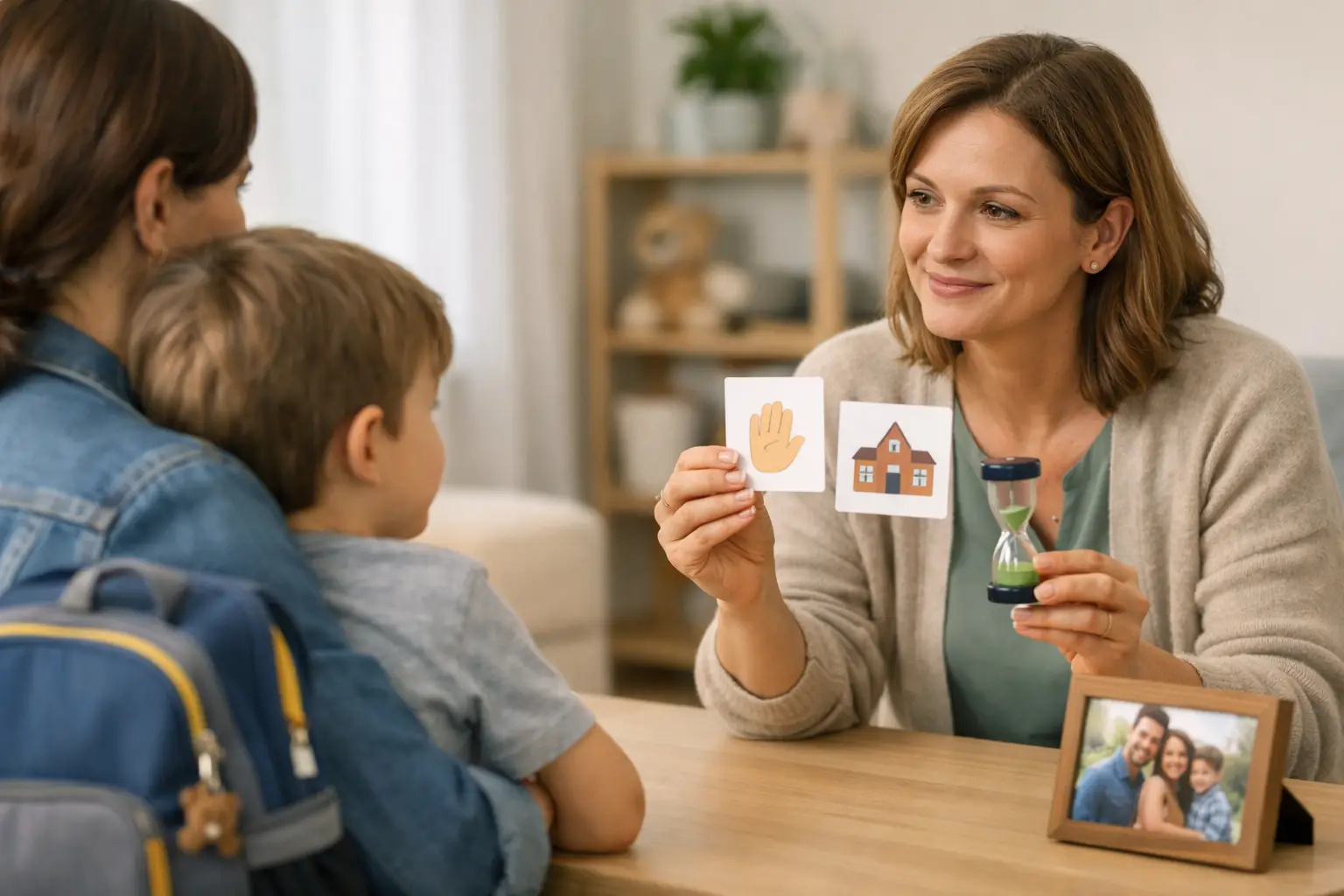
Whether your child is starting preschool or kindergarten, practice the routine before the first day. Visit the building if possible, walk through the morning schedule, and let your child help choose a backpack or lunchbox. Keep the explanation simple and honest: you will say goodbye, they will have a day with their teacher, and you will come back.
In the weeks beforehand, build small independence skills into daily life. Let your child practice using the bathroom, putting items in a bag, opening easy snack containers, and cleaning up one activity before starting another. Read books about starting school, but leave room for all feelings. A child can be excited, worried, proud, and resistant in the same afternoon.
Most of all, try not to frame the decision as a race. Preschool and kindergarten are not milestones your child has to conquer before everyone else. The best next step is the one that gives them a steady foundation: a place to feel safe, capable, known, and ready to keep growing.