How to Encourage Toddler Independence Daily
Your toddler insists on putting on their own shoes, then gets both feet stuck in one sneaker. It may be tempting to step in immediately, especially when you need to get out the door. But these small, messy attempts are exactly where confidence grows. Learning how to encourage toddler independence is less about asking a young child to do more alone and more about creating safe, realistic chances to try.
Toddlers want control because they are discovering that they can affect the world around them. That drive can look like stubbornness at times, but it is also an important part of development. With a few practical adjustments, you can support growing skills without turning every routine into a power struggle.
Start With Small, Repeatable Jobs
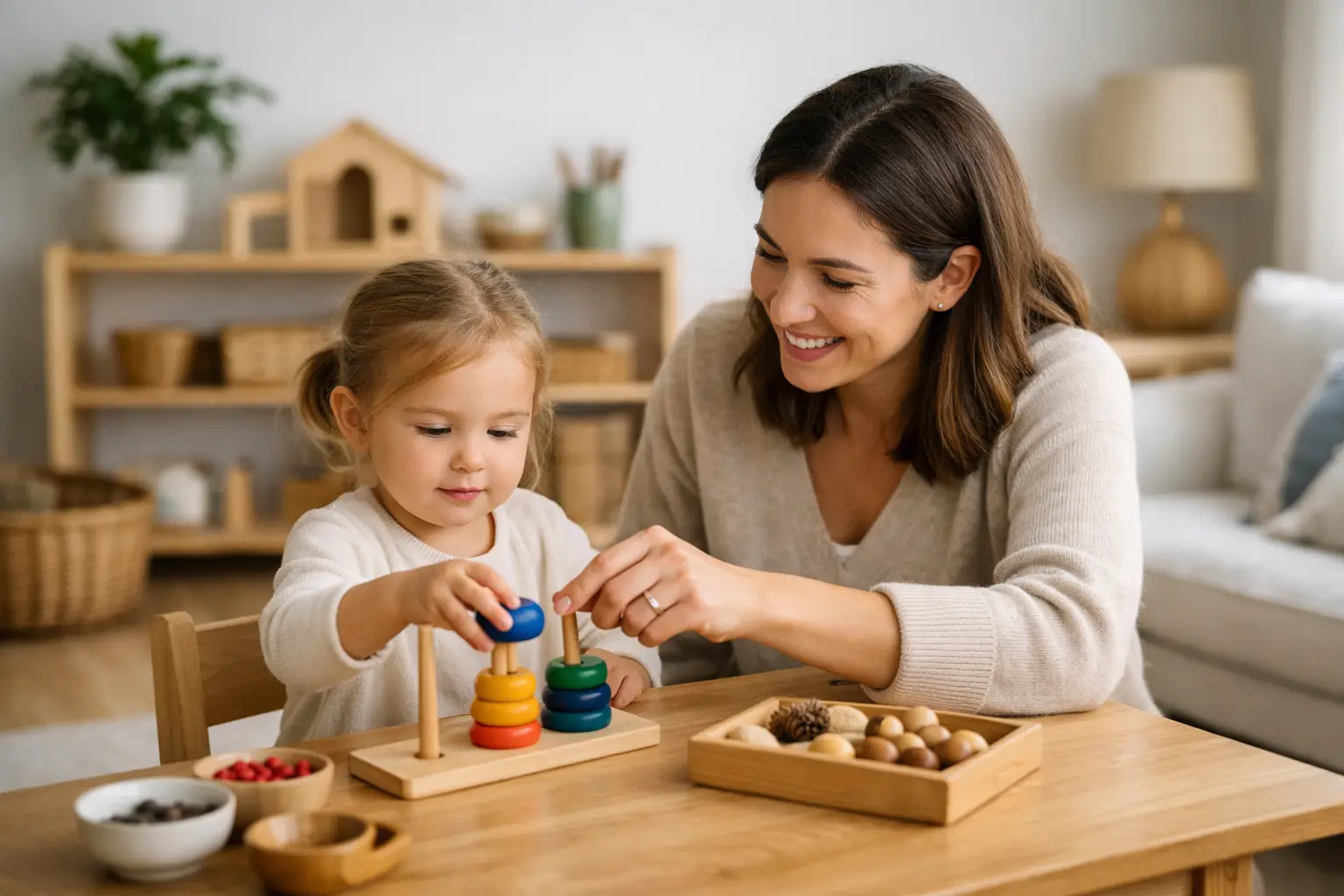
Independence develops through practice, not pressure. A toddler is not ready to manage a full morning routine alone, but they may be ready to carry their pajamas to the hamper, place a napkin on the table, or put books back in a basket.
Choose one or two jobs that happen at the same time each day. Repetition helps toddlers understand what is expected and lets them experience success without needing a long explanation. For example, after snack, your child can carry their cup to the counter. Before bath, they can choose between two pairs of pajamas and place their dirty clothes in the hamper.
Keep the task genuinely useful. Toddlers often recognize when an adult gives them a pretend job just to keep them busy. They do not need to do it perfectly to contribute. A slightly crooked napkin or a few toys left on the floor is still progress.
Make Your Home Easier for a Toddler to Use
Sometimes a child seems unwilling to do something independently because the setup asks too much of them. If the bathroom sink is too high, the cup cabinet is out of reach, or every toy is packed into one deep bin, an adult has to step in at every turn.
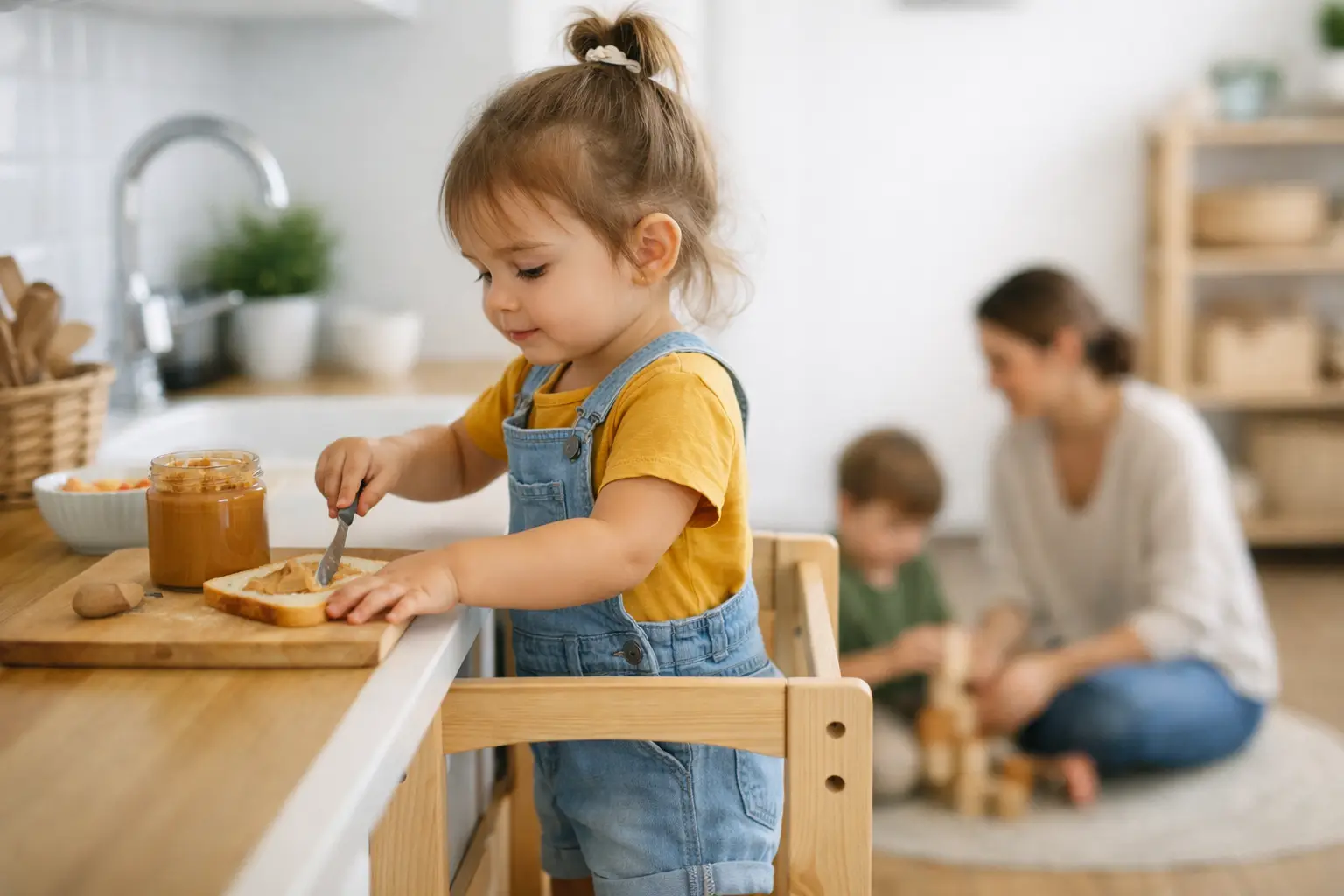
Look at everyday spaces from your toddler’s eye level. A sturdy step stool can make handwashing and toothbrushing more manageable with supervision. Low hooks for coats, an accessible basket for shoes, and a small laundry hamper can make simple routines possible. In the kitchen, you might keep a few child-safe cups and plates in a low drawer so your toddler can help set the table.
The goal is not to make your home completely child-led. Safety still comes first. Medicines, cleaning products, sharp tools, cords, and unsafe climbing areas should remain secured and out of reach. Independence works best within clear, prepared boundaries.
Offer Choices You Can Live With
Toddlers need opportunities to make decisions, but unlimited choices can be overwhelming. Offering two acceptable options gives them a sense of control while allowing you to hold the boundary.
Try choices such as, “Do you want the red shirt or the green shirt?” or “Would you like to walk to the car holding my hand or be carried?” Both options move the routine forward. Avoid choices when there is no real choice, such as asking whether they want to leave the park when it is already time to go.
If your toddler asks for an option that will not work, respond calmly and simply: “You wanted sandals, but it is raining. You can choose your boots or your sneakers.” They may still be disappointed. Supporting independence does not mean preventing frustration. It means helping your child practice decision-making while you remain the steady adult.
Let Them Struggle a Little, Not Alone
One of the hardest parts of encouraging independence is knowing when to help. Toddlers build problem-solving skills when they have time to try, make mistakes, and try again. If you take over at the first sign of frustration, the message can become, “This is too hard for you.”
Pause before stepping in. You might say, “You are working hard to pull up that zipper,” or “Try holding the cup with two hands.” Offer the smallest amount of help needed, sometimes called scaffolding. You can start the zipper and let your toddler pull it up. You can steady the bowl while they stir. You can hold the waistband open while they step into their pants.
There is a difference between productive struggle and total overwhelm. If your child is becoming increasingly upset, tired, or unsafe, step in without shame. “That was frustrating. I am going to help with this part, and you can do the next part.” This protects their confidence more effectively than insisting they finish when they are past their limit.
Build Independence Into Daily Routines
Routines give toddlers a predictable place to practice. Rather than adding a long list of new expectations, choose moments already built into your day.
Getting dressed
Let your toddler choose between two weather-appropriate outfits, push their arms through sleeves, or pull off socks. Dressing independently takes time, so begin the process earlier when possible. On rushed mornings, it is okay to help more. A flexible approach is more sustainable than turning clothing into a daily battle.
Meals and snacks
Toddlers can help wash produce, stir ingredients, pour pre-measured items, or carry lightweight utensils to the table. At meals, allow them to use a spoon or fork even when it is messy. Self-feeding supports coordination and confidence, and the cleanup is usually temporary.
Cleanup and transitions
A simple cleanup routine can reduce resistance over time. Give one clear direction, such as, “Put the blocks in the basket,” instead of, “Clean up everything.” A short song or a visual reminder can help, especially for toddlers who respond better to cues than repeated verbal prompts.
Personal care
Your child may be able to wash hands, wipe their face, brush teeth with your help, and assist with diapering or toileting routines. During toilet learning, independence should never become pressure. Offer manageable steps, such as pulling pants down or flushing, and keep your response calm if accidents happen.
Use Encouragement That Focuses on Effort
Praise can be helpful, but the words you choose matter. General statements like “Good job!” are warm, yet specific feedback teaches your child what they did and why it mattered.
Try saying, “You kept trying until the puzzle piece fit,” or “You put your shoes by the door without being reminded.” This kind of encouragement notices effort, persistence, and helpful behavior rather than making your approval the main goal.
Be careful not to overpraise every small action. Toddlers also benefit from enjoying their own accomplishment. After they complete a task, pause and ask, “How does it feel to do that yourself?” Their proud smile may say more than a big celebration.
Expect Pushback and Progress in Waves
A toddler who independently pours their water one day may demand that you do it the next. This is normal. Development is not a straight line, and children often seek extra help when they are tired, sick, adjusting to a change, or feeling emotionally stretched.
Independence can also bring stronger opinions. Your toddler may want to choose their cup, buckle the car seat, or press every elevator button. Hold firm limits around health, safety, and time-sensitive responsibilities. You can acknowledge the feeling while keeping the boundary: “You wanted to buckle it, and I need to do that part to keep you safe. You can clip the chest strap after I buckle it.”
If repeated requests are causing conflict, consider whether the expectation is age-appropriate. A two-year-old may manage a few clothing steps but still need lots of help. A three- or four-year-old may take on more, but temperament, motor skills, and family routines all affect readiness. Comparing your child to another toddler rarely gives useful information.
When to Offer More Support
Most toddlers need plenty of help while learning new skills. Still, if your child regularly avoids using one side of their body, seems unable to manage skills they previously handled, or has a level of frustration that consistently interferes with daily life, bring your questions to their pediatrician. Early support can clarify whether a developmental, sensory, or physical concern is involved.
For most families, the best approach is simpler: offer a manageable task, make room for the learning curve, and stay nearby. Your toddler does not need perfection or total freedom. They need the steady experience of hearing, “You can try, and I am here if you need me.”