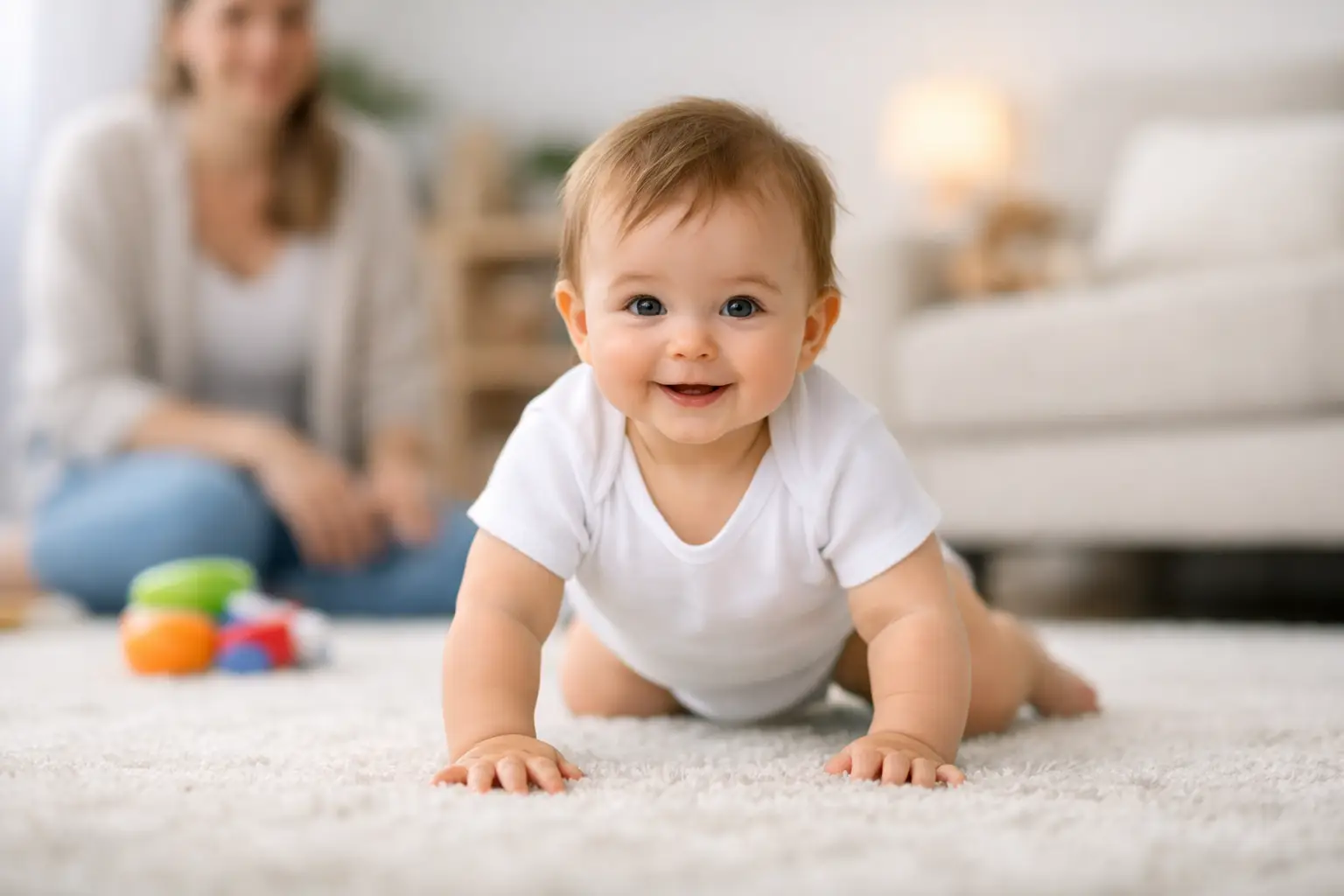
When Do Babies Start Crawling? What to Expect
A baby who has spent weeks happily rolling may suddenly begin pushing up, rocking on hands and knees, or scooting backward with surprising determination. If you are wondering when do babies start crawling, the short answer is that many begin moving independently between 6 and 10 months old. But the range of normal is wide, and not every baby crawls in the same way – or crawls at all.
Crawling is less about hitting a single milestone on schedule and more about your baby building strength, coordination, confidence, and curiosity. Watching those skills come together can be exciting, but it can also bring plenty of questions. Knowing what to look for can help you support your baby without turning every floor session into a test.
When Do Babies Start Crawling?
Many babies start crawling around 7 to 10 months. Some begin as early as 6 months, while others may not get moving until closer to their first birthday. A baby may also spend several weeks practicing before they truly travel across the room.
Before crawling, babies often develop a series of related skills. They may hold their head steady, roll both directions, sit with little or no help, push up during tummy time, and reach for toys while shifting their weight. These abilities build the core, shoulder, hip, and hand strength needed for independent movement.
It is also common for babies to move backward before they move forward. They are learning how to coordinate both sides of their body, and backward motion is often the easier result at first. It can look frustrating to a baby who is trying to reach a toy, but it is still useful practice.
Crawling Can Look Different From Baby to Baby
The classic hands-and-knees crawl is familiar, but it is only one way babies get around. Some babies army crawl on their bellies, pulling forward with their arms. Others bottom-scoot while sitting upright, crawl with one knee down and one foot planted, or roll strategically toward what they want.
These variations are usually part of typical development when your baby is using both sides of their body, making progress over time, and continuing to develop other motor skills. Some babies skip crawling altogether and move from sitting to pulling up, cruising along furniture, and eventually walking.
Skipping crawling does not automatically mean something is wrong. Still, it is worth mentioning at regular well-child visits, especially if your baby seems unable or unwilling to bear weight through their arms or legs, uses only one side consistently, or is not gaining other movement skills.
Signs Your Baby May Be Ready to Crawl
There is no need to rush your baby toward crawling, but a few signs often show that the groundwork is in place. Your baby may spend more time on their tummy without becoming upset, push up high on straight arms, pivot in a circle, or rock back and forth on hands and knees.
You might also notice your baby sitting independently and then leaning forward to grab a toy. That transition is a big deal. It asks them to balance, shift weight, and recover without falling. Repeated attempts to get a little farther toward a favorite object are another strong sign that motivation is growing alongside physical ability.
Some babies become more vocal or frustrated during this stage because their desire to explore is ahead of their ability to get there. A little grunting, effort, and brief frustration are normal. Your role is to offer a safe chance to practice, then provide comfort when they have had enough.
How to Encourage Crawling Without Pushing It
The most effective support is usually simple, regular floor time. Babies learn to move by moving, not by being placed into positions they cannot reach on their own.
Start with supervised tummy time on a firm, clear surface. If your baby dislikes it, try several short sessions during the day rather than one long session. Get down at their eye level, talk or sing, and place an interesting toy just beyond reach. A baby-safe mirror can also make floor time more engaging.
Give your baby room to explore. A blanket on the floor can work for early practice, but a firmer surface often makes it easier for babies to push through their hands and knees once they are ready. Bare feet and comfortable, nonrestrictive clothing can help them feel the floor and move freely.
Try placing a favorite toy slightly to one side rather than directly in front of your baby. Reaching across the body encourages weight shifting, which is a key part of crawling. If your baby gets frustrated, move the toy closer. The goal is successful effort, not making them work until they cry.
Limit long stretches in containers when possible. Car seats are necessary for travel, and bouncers or high chairs can be useful for short periods, but they do not give babies much opportunity to practice the movements that lead to crawling. A few realistic changes, such as putting your baby on the floor while you fold laundry nearby, can add meaningful practice to the day.
Avoid trying to teach crawling by moving your baby’s arms and legs for them or propping them on hands and knees for long periods. Gentle modeling is fine, but babies benefit more from discovering how their own bodies work. Letting them struggle briefly, while staying close and supportive, builds problem-solving along with strength.
Make Your Home Safer Before Your Baby Takes Off
Crawling often arrives with very little warning. One day your baby stays on the play mat, and the next they are headed for a cord, pet bowl, or open cabinet. Start baby-proofing before your baby is fully mobile.
Get down on the floor and look at the room from your baby’s perspective. Cover outlets, secure furniture that could tip, move cords and small objects out of reach, and use safety gates where needed. Keep medications, cleaning products, batteries, and anything that could be a choking hazard locked away or stored high up.
Be especially mindful of stairs, bathrooms, fireplaces, and rooms where older siblings keep small toys. Crawling babies investigate with their hands and mouths, so supervision still matters even in a carefully prepared space. A safe area lets your baby practice freely and gives you a little more peace of mind.
When to Talk With Your Pediatrician
Milestones are useful guideposts, not deadlines. Your pediatrician looks at your child’s overall development, including muscle tone, strength, communication, feeding, social connection, and progress across time. One missed milestone by itself does not tell the whole story.
That said, bring up concerns sooner rather than waiting for the next routine appointment if your baby seems very stiff or very floppy, does not bear weight through their legs when supported, strongly favors one side of the body, loses skills they previously had, or is not making progress toward movement. You can also ask for guidance if your baby is nearing 12 months and is not crawling, scooting, rolling to get around, pulling to stand, or otherwise finding ways to move independently.
Early support can be helpful when it is needed. Your pediatrician may simply reassure you, monitor development more closely, or recommend an evaluation through early intervention services or a pediatric physical therapist. Asking a question is not overreacting. It is a practical way to understand what your individual baby needs.
Keep the Focus on Progress, Not the Calendar
It is easy to compare your baby to a friend’s child or to the milestone videos that fill your feed. But crawling is not a competition, and the exact age matters less than steady growth in skills. A baby who rolls, reaches, sits, pivots, and experiments with new positions is doing meaningful work, even before they cross the room on all fours.
Offer plenty of safe floor time, follow your baby’s cues, and celebrate the small attempts that lead to bigger movement. When your baby is ready, that first determined crawl will be less about checking off a milestone and more about the beginning of a whole new kind of independence.