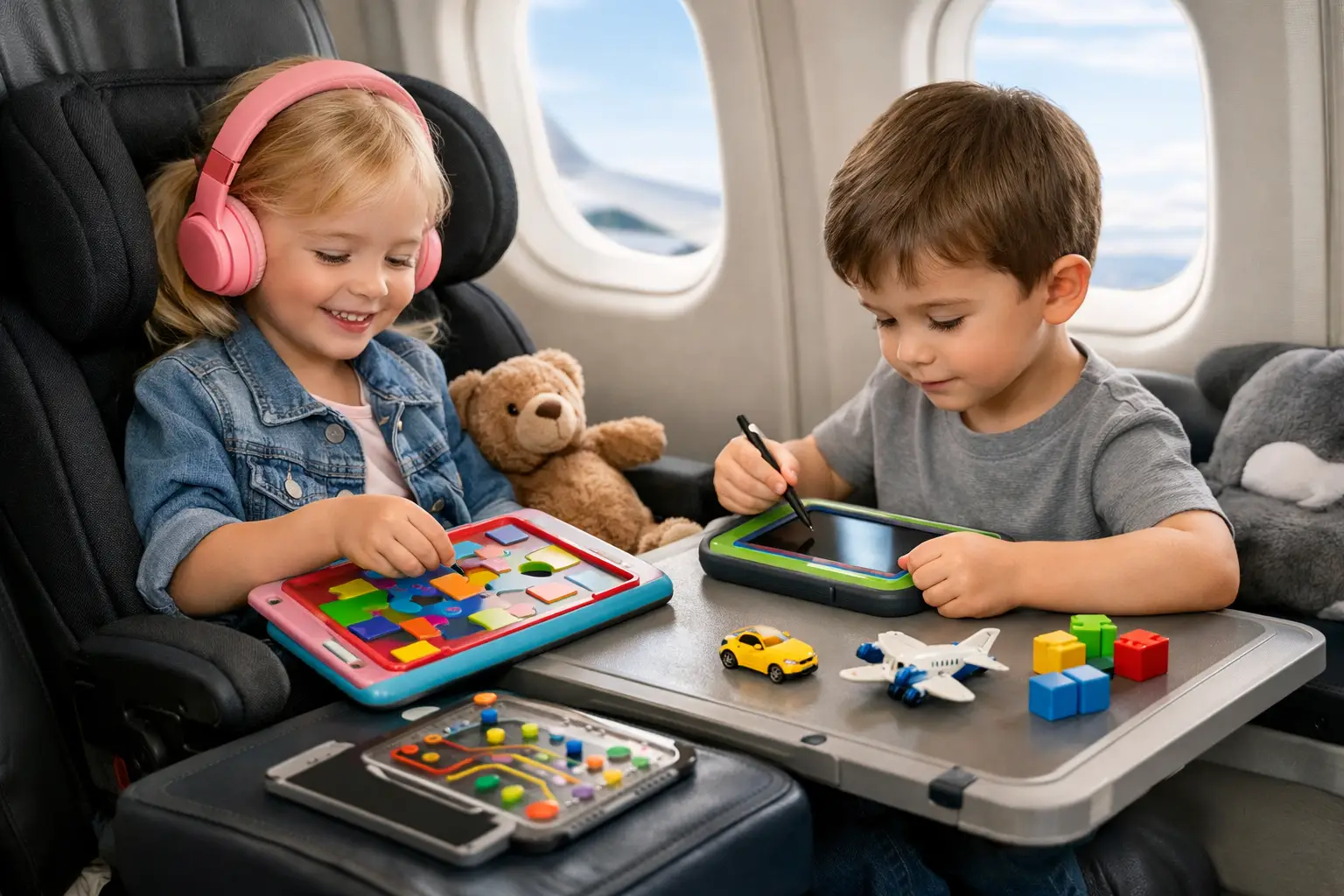
Best Travel Toys Preschoolers Will Actually Use
A preschooler who has been buckled into a car seat for two hours does not need a bag full of toys. They need one engaging activity that feels new, fits in their hands, and does not disappear under the seat in 30 seconds. The best travel toys preschoolers use repeatedly tend to be simple, portable, and open-ended enough to change with their attention span.
That matters because travel can ask a lot of young children. They are sitting longer than usual, coping with noise and transitions, and often missing meals or naps. A thoughtful toy can give them a familiar, calming task while giving you a few quieter minutes to navigate the drive, flight, or restaurant table.
What makes a travel toy work for preschoolers?
The right choice depends on where you are going and how your child usually plays. A child who loves telling stories may stay absorbed in small figures, while a child who wants to move and build may do better with a magnetic activity or reusable sticker scene. There is no single toy that works for every 3-, 4-, or 5-year-old.
Still, the strongest options have a few things in common. They are easy for preschool hands to manage, do not require constant adult help, and have few loose pieces. They also offer more than one way to play. A toy that can be sorted, matched, built, or turned into a pretend-play game earns its spot in your bag.
Before packing anything, check the age guidance and consider your child’s habits. Small pieces can be unsafe for younger siblings who may be nearby, and toys with many tiny parts are rarely a good fit for a cramped car or airplane seat.
12 best travel toys for preschoolers
1. Reusable sticker books
Reusable stickers are a parent favorite for good reason. Preschoolers can create a farm, city, beach, or vehicle scene, peel everything off, and start again. They support fine motor skills and imaginative play without producing a pile of paper scraps.
Choose a book with sturdy pages and large, easy-to-grab stickers. Keep the book in a zippered pouch when it is not in use, since a stray sticker can still find its way onto a car window or airplane tray table.
2. Water-reveal coloring pads
A water-reveal pad lets children “paint” pictures with a refillable water pen. As the page dries, the colors fade and the activity can be used again. It is especially useful for flights, waiting rooms, and restaurant meals because there are no markers to uncap and no ink to clean up.
Bring one spare water pen if you are taking a longer trip. A lost or empty pen can end the fun quickly, and preschoolers are not always gentle with the tip.
3. Magnetic drawing boards
A small magnetic drawing board gives children a place to draw letters, faces, roads, and pretend menus without leaving marks on the seat or table. It also works well for simple parent-child games, such as drawing an animal for your child to guess.
Look for a version with an attached pen and a simple slider eraser. Accessories like separate stamps can be fun, but they are easy to lose in transit.
4. Magnetic dress-up sets
Magnetic dress-up sets turn quiet time into a creative challenge. Your child can combine outfits, build funny characters, or make up a story about where each person is going. A metal case that holds the pieces and doubles as a play surface is particularly practical.
These sets are best for children who no longer mouth small objects and can help gather pieces before getting out of the car. They are engaging, but they do require a little more parent supervision than a coloring pad.
5. Busy books and quiet books
A fabric busy book may include zippers, buckles, matching activities, laces, and simple puzzles. For preschoolers, it can be a satisfying hands-on alternative to a screen, especially during a long wait when they are feeling restless.
Avoid books that are overly complicated or packed with detachable pieces. The goal is independent practice, not another task for you to manage. A few familiar fasteners paired with one or two new challenges is often enough.
6. Travel-sized magnetic puzzles
Puzzles help some children settle into focused play, particularly if they already enjoy doing them at home. A magnetic version keeps pieces together better than a standard cardboard puzzle and can be worked on a lap tray or flat surface.
Keep the piece count realistic. A 12- to 24-piece puzzle is usually more successful on the go than a large puzzle that requires spread-out space and patient searching.
7. Lacing cards
Lacing cards are lightweight, quiet, and excellent for building coordination. Preschoolers can thread a cord through holes around an animal, vehicle, or shape, then repeat the activity in a new pattern. The slow, repetitive movement can be calming when a child is overstimulated.
Choose thick cards and cords with secure ends. If your child finds lacing frustrating at home, skip it for travel. A trip is not the best time to introduce an activity that may lead to tears.
8. A small play dough kit
A compact container of play dough with one or two tools can occupy a child for a surprisingly long time. They can make food, animals, roads, or little people, which gives the activity lots of room to grow.
This is a better option for a hotel room, family visit, or restaurant patio than for a crowded flight. Dough can pick up lint, get pressed into upholstery, and become a problem if your child is seated near a younger sibling who still puts objects in their mouth.
9. Chunky building sets in a zippered pouch
A small set of interlocking blocks or large construction pieces can inspire towers, houses, vehicles, and sorting games. Bring only a limited number – enough to build with, not enough to turn the floor of your vehicle into a building site.
A flat lap tray can make blocks easier to use in the car. For air travel, consider whether your child is likely to drop pieces frequently. In that setting, a magnetic building activity may be less stressful.
10. Small pretend-play figures
A few animals, vehicles, or people can carry a big imaginative load. Your child may create a rescue mission, a picnic, or a trip that mirrors their own day. These toys work especially well when your preschooler likes to narrate play out loud.
Rather than bringing a whole bin, choose three to five figures and pair them with a small cloth pouch. Limiting the set makes cleanup simpler and often encourages more creative storytelling.
11. Picture-card games
Picture cards can be used in several ways: matching pairs, sorting by color or category, telling a story, or playing a simple version of “I spy.” They are a smart choice when you want an activity that can shift between independent play and connection with an adult.
For a tired child, keep the game low-pressure. You do not need to teach rules or insist on taking turns perfectly. Let the cards become prompts for conversation and imagination.
12. A child-friendly audio player with stories
Not every travel toy needs to be something a child holds. An audio player loaded with familiar songs, gentle stories, or age-appropriate listening games can give little hands a break while keeping a preschooler engaged. Headphones made for children can be useful on planes, provided your child will tolerate wearing them.
Audio is often most effective after an active play option. Let your child build, draw, or use stickers first, then offer a story when their body needs a calmer reset.
How to pack travel toys without overpacking
A useful rule is to bring three activities for a short outing and five or six for a full travel day. Start with one familiar favorite, add one new-to-them activity for novelty, and keep the rest out of sight until you need them. Rotating toys is more effective than handing over every option at once.
Pack each activity in its own small pouch or container. This makes it easy to offer one thing at a time and makes cleanup less overwhelming. If your preschooler can help return items to the pouch, you are also building a simple travel routine: play, pack away, choose what comes next.
Save the most exciting toy for the toughest part of the day. That may be boarding the plane, the last hour of a road trip, or the stretch between ordering food and the meal arriving. A new sticker book is more likely to hold attention when it is not introduced before your child is already bored.
A toy is helpful, but connection still matters
Even the best travel toys for preschoolers will not prevent every complaint, wiggle, or meltdown. Young children still need movement breaks, snacks, sleep, and reassurance when plans change. A toy is one practical tool, not a promise of a perfectly quiet trip.
When possible, pair activities with small moments of connection: ask what they are building, let them tell you about their sticker scene, or listen to one chapter of a story together. Those ordinary moments can help travel feel less like a long interruption and more like an adventure your child is part of.