15 Examples of Positive Reinforcement for Kids
A toddler puts one shoe in the basket after being reminded five times. Your instinct may be to move on before the next task unravels. But pausing to say, “You put your shoe away even though you wanted to keep playing. That was helpful,” can make that small success more likely tomorrow. That is the heart of examples of positive reinforcement: noticing the behavior you want to see again and responding in a way that helps it grow.
Positive reinforcement is not about praising children all day or buying cooperation with treats. Used thoughtfully, it is a practical parenting tool for teaching skills, strengthening connection, and making everyday routines feel more manageable.
What positive reinforcement really means
Positive reinforcement means adding something a child experiences as positive after a behavior, which increases the chance they will repeat that behavior. The “positive” part means something is added, not that the child has to be cheerful or perfect. It might be warm attention, a specific compliment, extra playtime, a high-five, a sticker, or the pride of getting more independence.
For young children, immediate responses work best. A preschooler who washes their hands before lunch connects your encouraging words to the action far more easily than they would if you mention it at bedtime. Be specific, too. “Great job” is kind, but “You came to the table when I called the first time” teaches a child exactly what worked.
Reinforcement is most useful when it supports skills your child is still learning. It can help with getting dressed, following routines, using gentle hands, trying unfamiliar foods, practicing emotional regulation, and returning to a task after frustration. It should never require a child to suppress a real feeling. You can reinforce how they handle anger without expecting them not to feel angry.
15 examples of positive reinforcement at home
The best reinforcer depends on the child and the moment. Some children light up when they receive your focused attention, while others are motivated by choice, independence, or a visible progress chart. These examples can be adapted for toddlers, preschoolers, and early elementary-aged children.
1. Name the behavior you noticed
When your child shares a toy, say, “You gave your sister a turn with the truck. That was thoughtful.” Specific praise helps children understand what to repeat, rather than leaving them to guess why they earned approval.
2. Give a high-five or affectionate connection
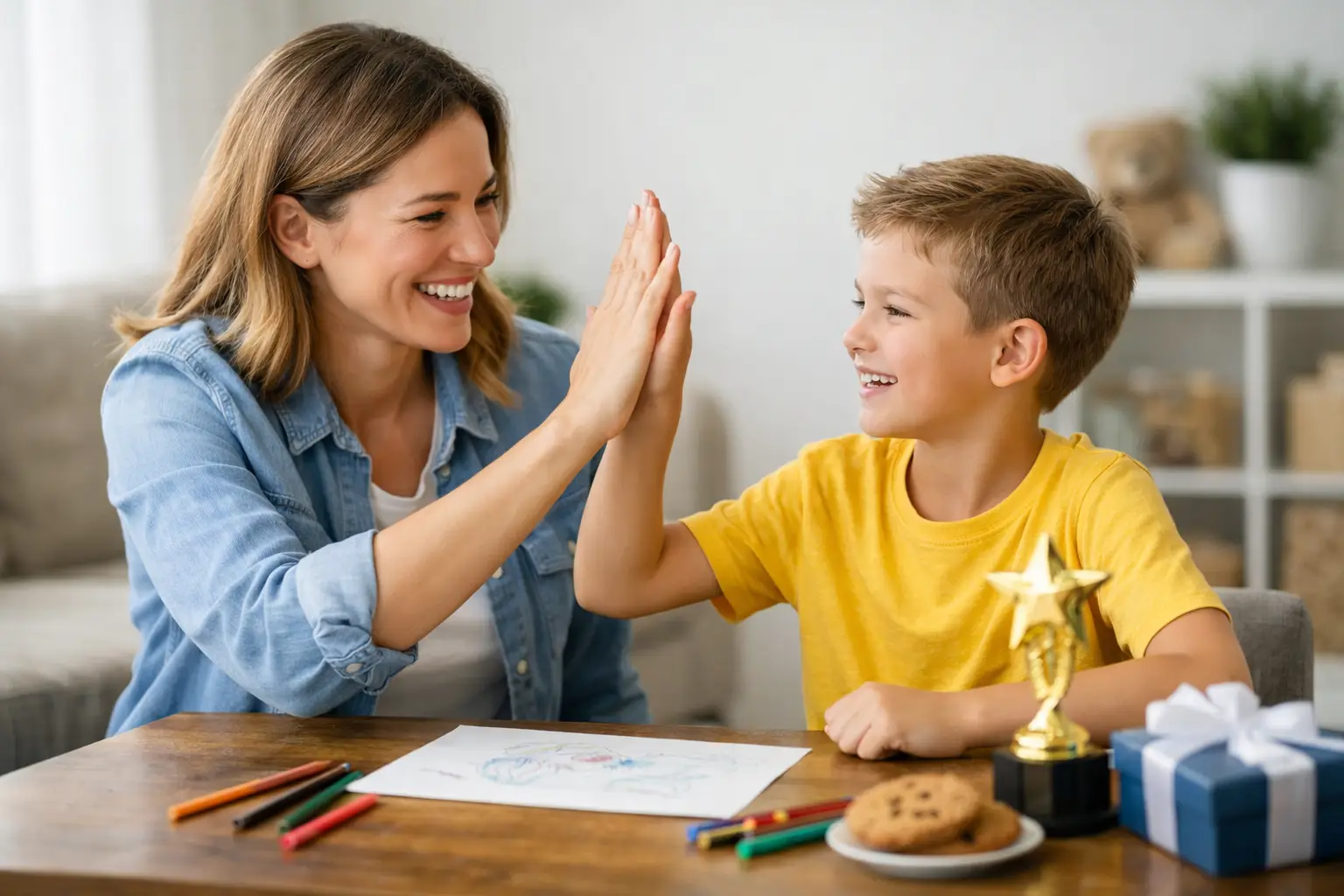
A high-five, fist bump, hug, or happy dance can reinforce a behavior immediately. After your child puts crayons away, try, “Cleanup crew high-five!” Physical affection should always match your child’s comfort level.
3. Offer focused attention
If your child plays gently beside you while you finish a task, give them a few minutes of undivided attention afterward. You might say, “You waited while I finished the call. Now I’m ready to see what you built.” For many children, your attention is more meaningful than a prize.
4. Let them choose the next small thing
Choices can be a powerful reward because they offer appropriate control. “You got your pajamas on when it was time. Do you want to choose one book or two tonight?” Keep the choice small and one you can genuinely honor.
5. Use a sticker or simple progress chart
A sticker chart can work well for one clear, age-appropriate goal, such as staying in bed after tuck-in or brushing teeth without a battle. Keep the target realistic, use it for a limited period, and pair each sticker with encouraging words. The chart is a teaching support, not a scorecard.
6. Build in extra playtime
For a child who completes a morning routine, an extra 10 minutes at the playground or a short game before dinner can be motivating. Frame it as a predictable result: “You got ready with time to spare, so we have time for one round of tag.”
7. Recognize effort, not just outcomes
Your child may not zip their coat perfectly yet, but they can still be reinforced for trying. Say, “You kept working on that zipper even when it was tricky.” This supports persistence and reduces the pressure to perform perfectly.
8. Give them a helper role
Children often respond well to meaningful responsibility. When your child remembers to feed the pet or brings their plate to the sink, acknowledge it and offer another manageable helper job. “You took care of your job. Can you be my napkin helper tonight?”
9. Use a special note or drawing
A quick note in a lunchbox or a picture taped near the child’s bed can reinforce a positive moment from earlier in the day. For children who are beginning to read, write, “I noticed you used calm words when you were upset.” Younger children may enjoy a simple heart or drawing with the message read aloud.
10. Celebrate cooperation with a family ritual
After a smooth cleanup or a cooperative trip out, turn on a favorite song for a two-minute kitchen dance party. This works especially well when the whole family contributed. It keeps the emphasis on shared teamwork rather than competition between siblings.
11. Give more independence
Independence is a natural reinforcer for many kids. If your preschooler follows the bathroom routine, let them take the lead on the next step: “You remembered soap and rinsed your hands. You can get your own towel today.”
12. Offer a token toward a larger privilege
For an older preschooler or young school-age child, tokens can build toward a weekend privilege, such as choosing the family movie. Use a small number of attainable tokens and focus on one behavior at a time. If the system becomes too complicated, it often creates more conflict than it solves.
13. Reflect their growing skill back to them
Instead of only praising, help your child notice their own progress. “Last week you needed me to sit beside you while you cleaned up. Today, you started on your own.” This kind of reflection builds internal confidence, which is the long-term goal.
14. Make room for a preferred activity
After your child practices a less-preferred task, such as putting laundry in drawers, allow time for something they enjoy. “You finished your job. Now you can choose whether we draw or build blocks together.” Avoid making every basic expectation a negotiation, but this can be helpful while a new routine is taking shape.
15. Use calm encouragement after a reset
Positive reinforcement matters after mistakes, too. If your child throws a block, helps repair the problem, and tries again with gentle hands, recognize the recovery: “You were upset, then you picked up the block and used gentle hands. That was a strong reset.” This teaches that learning to recover is valuable.
How to make positive reinforcement work
Start with one behavior that would genuinely make family life easier, such as putting shoes in the basket, coming to the table, or using words instead of hitting. Make the expectation concrete. “Be good” is too broad for a young child, while “Put your cup on the counter after breakfast” gives them a clear action.
Offer reinforcement right after the behavior whenever possible. Then, as the skill becomes more dependable, gradually make your response less frequent. You do not need to praise every single hand wash forever. A smile, brief acknowledgment, or occasional comment is enough once the habit is established.
It also helps to notice the behaviors that are already going well. Parents understandably spend a lot of energy responding to whining, stalling, and conflict because those moments need attention. Yet children often repeat what reliably gets connection. A few intentional moments of positive attention can reduce the need to seek attention through disruptive behavior.
Positive reinforcement versus bribery
The difference usually comes down to timing and purpose. Positive reinforcement is planned or offered after a behavior to teach and strengthen a skill. Bribery often happens in the middle of a conflict to stop an unwanted behavior: “If you stop screaming in the store, I’ll buy you candy.”
Every parent has made an on-the-spot deal during a hard moment. There is no need for guilt. Still, if treats become the only way a child cooperates, pause and reset. Use simpler expectations, prepare before challenging situations, and choose reinforcers that build connection or competence instead of relying only on food or toys.
When praise can backfire
Too much vague praise can make children look to adults for constant approval. Praise that labels a child, such as “You’re so smart,” may also make some children avoid challenges where they could fail. Aim for language that describes effort, strategy, kindness, or progress: “You tried a different way when the tower fell.”
Be mindful of fairness between siblings as well. You do not have to praise everyone equally in every moment, but avoid comparisons such as, “Why can’t you listen like your brother?” Each child needs to feel seen for their own growth.
Positive reinforcement works best when it is sincere, specific, and connected to a skill your child is learning. Look for one small moment today that you might normally rush past, and let your child know exactly what they did well. Those brief moments can become the building blocks of a more cooperative, confident home.