Toddler Tooth Brushing Guide for Less Daily Drama
A toddler who clamps their mouth shut, grabs the toothbrush, or suddenly needs to discuss every object in the bathroom is not trying to ruin your evening. They are acting like a toddler. This toddler tooth brushing guide can help you protect your child’s teeth while making the routine feel more predictable, less pressured, and more doable on the nights when everyone is tired.
The goal is not a picture-perfect two minutes with a smiling child. The goal is consistent, parent-led cleaning that gradually teaches your toddler that brushing is simply what happens in the morning and before bed.
Toddler tooth brushing guide: the basics that matter
Brush your toddler’s teeth twice a day: once in the morning and once before bed. The bedtime brushing matters especially because food and drink can remain on teeth overnight, while saliva flow naturally decreases during sleep.
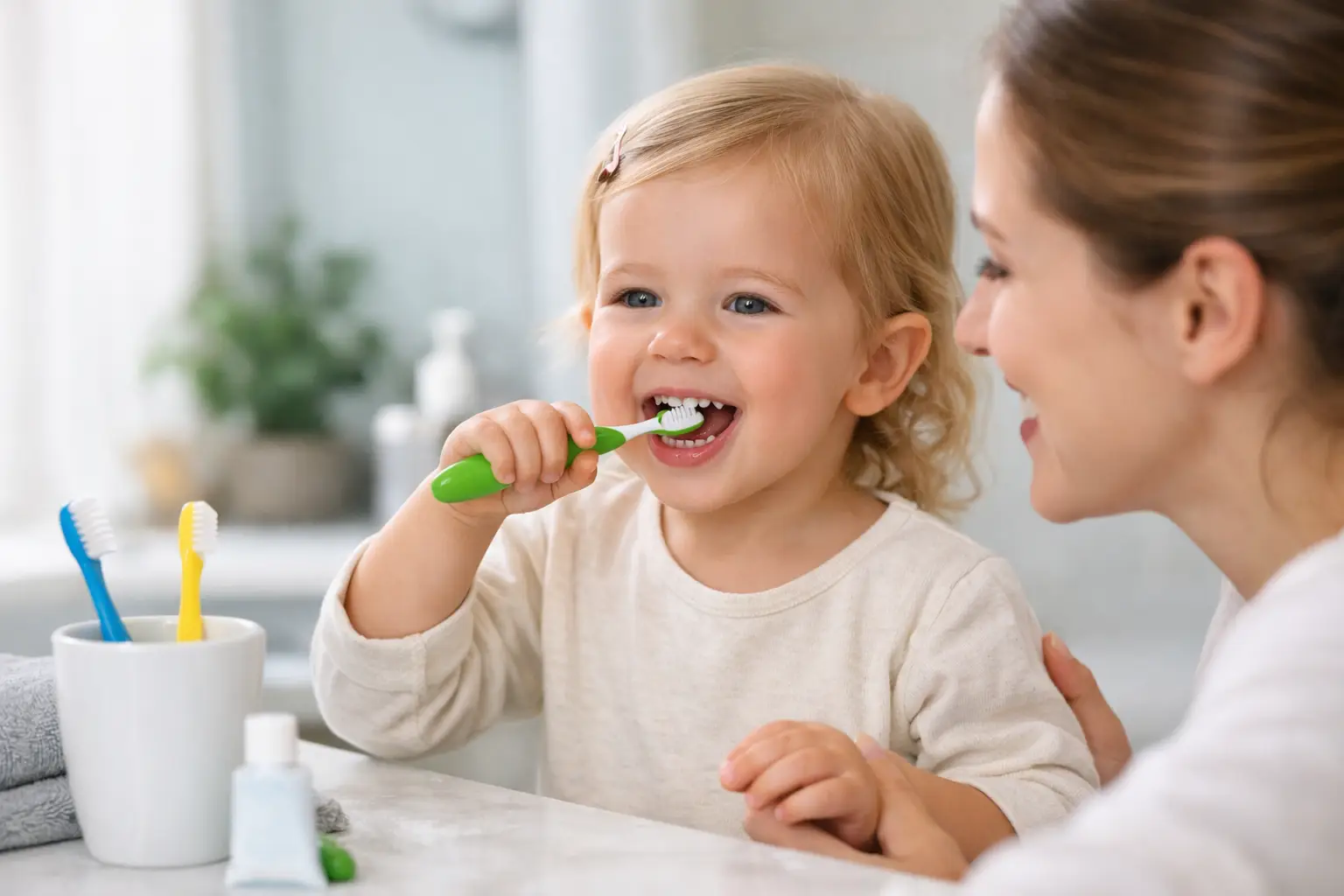
Use a soft, child-sized toothbrush and fluoride toothpaste. For children under age 3, use a smear about the size of a grain of rice. From ages 3 through 6, use a pea-sized amount. Fluoride strengthens tooth enamel and helps prevent cavities, so a tiny amount is useful even when a child is still learning not to swallow toothpaste.
Your toddler will probably want to do the brushing themselves, and that interest is worth encouraging. Let them hold the brush or take a turn first if it reduces resistance. But an adult should always do the thorough brushing afterward. Toddlers do not yet have the coordination to clean every tooth surface well, particularly the back molars and the gumline.
At this age, think of brushing as a shared task: your child practices independence, and you make sure the job gets done. Most children need close help with brushing until roughly ages 6 to 8, though every child develops hand skills at a different pace.
A simple routine your toddler can learn
Toddlers respond well to routines because routines reduce negotiation. If tooth brushing happens after pajamas and before stories every night, it becomes less like a request and more like the next familiar step.
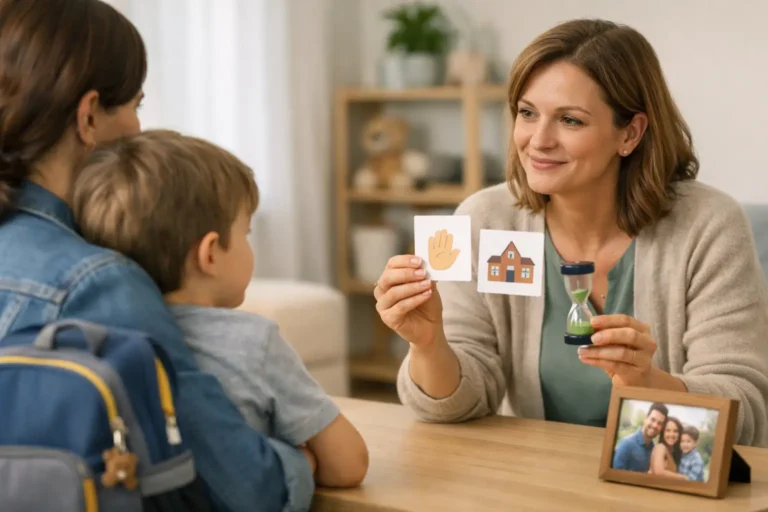
Try using the same short sequence: potty, pajamas, brush teeth, books, bed. Keep the words simple and repeat them consistently: “First we brush, then we read.” Avoid presenting brushing as a question when it is not optional. “Do you want to brush your teeth?” invites a reasonable but unhelpful “No.” “It’s time to brush teeth. Do you want the red brush or the blue brush?” gives your child a small, appropriate choice.
Many toddlers cooperate better when they can see what is happening. Stand behind them at the mirror, sit them on your lap, or have them lie with their head in your lap on the floor or bed. The best position is the one that gives you a clear view and feels secure for your child.
Brush gently in small circles along the front, back, and chewing surfaces of every tooth. Spend extra attention on the back teeth, where sticky foods often linger. You do not have to turn the routine into a long lecture. A cheerful song, counting to 10 for each section, or naming the teeth as you brush can be enough distraction.
After brushing, encourage your child to spit out any extra toothpaste if they can. There is no need to rinse with water, since rinsing can wash away the fluoride left on the teeth. If your toddler swallows the small recommended amount, stay calm. That is one reason the amount of toothpaste is kept so small.
When your toddler refuses to brush
Resistance is common, especially when toddlers are hungry, overstimulated, determined to be in control, or already frustrated by bedtime limits. A calmer approach is usually more effective than repeated warnings or a lengthy standoff.
Start by looking for the pattern. Does refusal happen only at night? Is your child bothered by a strong mint flavor, a buzzing electric toothbrush, or water dripping down their chin? Are they trying to avoid brushing because it has become the last step before separation at bedtime? The solution depends on what is making the routine hard.
If taste is the issue, try a mild fluoride toothpaste flavor made for young children. If sensory discomfort is the problem, use less toothpaste, offer a dry brush first, or let your child wipe their mouth with a towel between sections. A manual toothbrush may feel more manageable than an electric one for some toddlers, while other children are excited by the novelty of an electric brush. There is no single best choice if both options allow for gentle, thorough cleaning.
Keep the boundary steady: teeth still need to be brushed. But you can make room for feelings within that boundary. You might say, “You don’t like brushing right now. I hear you. I’m going to help keep your teeth clean, then we can read your book.” This validates the feeling without handing over the decision.
For a child who fights the toothbrush every night, shorter and more frequent practice can help. During a calm time of day, let them brush a stuffed animal’s teeth, practice opening wide in the mirror, or take a playful 20-second turn. Low-pressure practice builds familiarity before you need cooperation at bedtime.
What to do when brushing becomes a power struggle
It is tempting to bargain with extra treats, videos, or threats when you are running out of patience. Occasionally using a song or a very brief timer is fine, but relying on a screen every night can create a new bedtime dependency. Likewise, sugary rewards work against the reason you are brushing in the first place.
Instead, aim for a firm, boring consistency. Keep your response brief, use the same routine, and move on. The more attention a protest earns, the more likely a toddler may repeat it. That does not mean ignoring distress. It means offering comfort without turning tooth brushing into a 30-minute event.
If your child is physically resisting, prioritize safety. Use a stable position, stay gentle, and do the best cleaning you can rather than forcing a long session. A brief but consistent brushing is better than skipping the routine entirely. If resistance is intense, persistent, or connected to pain, do not assume it is only behavioral. A sore tooth, mouth injury, sensitive gums, or a sensory concern may need a dentist’s input.
Food, drinks, and the habits around brushing
Tooth brushing works best alongside a few realistic daily habits. Water is the best drink between meals and before bed. Frequent sipping on juice, sweetened drinks, sports drinks, or even milk can keep teeth exposed to sugars for long stretches of time. A bedtime bottle or cup containing anything other than water can raise cavity risk once teeth are present.
You do not need to ban every sweet food to support dental health. Frequency matters. It is generally easier on teeth to serve a sweet food with a meal than to offer small sugary snacks throughout the day. Sticky foods can cling to molars, so brushing before bed is particularly helpful after snacks such as fruit gummies, dried fruit, or crackers.
If your home uses fluoridated tap water, that may provide another layer of cavity protection. Whether a child needs additional fluoride depends on factors such as their water source, dental history, and cavity risk. Your pediatric dentist can give advice that fits your child rather than a one-size-fits-all answer.
When to call the dentist
Schedule your child’s first dental visit by their first birthday, or within six months of the first tooth appearing. Early visits are not just for finding problems. They help children get used to the dental office and give parents a chance to ask practical questions before cavities develop.
Call sooner if you notice white chalky spots near the gumline, brown or black areas on teeth, tooth pain, swelling, persistent bad breath, bleeding that does not improve with gentle brushing, or a chipped or injured tooth. White spots can be an early sign of enamel weakening, and early care may prevent a more serious cavity.
A toddler may not be able to explain dental pain clearly. New trouble sleeping, refusing favorite foods, chewing on one side, or suddenly objecting to brushing can all be clues worth checking.
The most useful mindset is simple: your toddler does not have to love tooth brushing for it to become a healthy habit. With a predictable routine, a tiny amount of fluoride toothpaste, and calm adult follow-through, you are giving them both cleaner teeth and a daily lesson in caring for their body.